Category Archives: Uncategorized

Reading Our Way Through Economic Disaster

(A post at WVFC by my boss Patricia Yarberry Allen, for which was a quite active midwife. Stay for the Henry Fonda video!)

Americans are drowning in a sea of information about the financial calamities that roil our society.  We seem to be incapable of understanding that our Titanic, a ship of a country so large and so prosperous, could ever go down.  One of the reasons these events seem so incomprehensible to us is that many of us have no memory of   the U.S. stock market boom of the 1920’s.
This was a time when people felt and acted just the way we did for the last 25 years. Rising stock prices on Wall Street enticed millions to invest and to borrow money to do so.  The automobile industry and industrial output in general were fueled by easy credit.  Businesses were assuming that they could sell more goods and services every year and were increasing their expenses.  Farmers were not part of this party but tried to survive by mortgaging the farm.  Interest rates were kept low by the government; thus credit was easy and business could grow.  It was all about more, more, more.
There were intelligent people then who warned that no system could grow quickly year after year after year without substantial adjustment.  “Too good to be true…you can’t get something for nothing,” then-New York governor Franklin Delano Roosevelt wrote in the late 1920’s.  But no one wanted to hear. Then on October 29, 1929 the stock market crashed, followed by a “run on banks.”

Bankcrowds
So many people wanted their money out of those banks that crowds clustered outside closed bank buildings.  The banks couldn’t give it to them — they had loaned out too much of the money, and could not cover mass redemptions.  The Great Depression began and lasted for much of the next decade.  The political inertia of the president at the start of the economic collapse, Herbert Hoover, did much to worsen the new downturn’s severity.
When Franklin Delano Roosevelt was elected as the next President after Hoover, he immediately got to work. He began to rebuild the economy and banking structure,  and put into place programs which are the still a part of the framework of the current government. The programs he created helped employ millions of Americans and built much of the country’s infrastructure.
The words above don’t really convey the complex madness of the “ Roaring Twenties” and the gritty texture of The Great Depression. Thankfully, there are several classic novels and histories that have become the standards by which those years are understood. I believe that  we can gain a better understanding of our own financial boom and bust if we immerse ourselves in a small library of essential reading now.   These are my basic recommendations.  I would love to hear from readers with suggestions.

  • Gatsby
    The Great Gatsby
    was written by F. Scott Fitzgerald in 1925.  This novel describes the boom at its pinnacle, wild parties, wild spending, and speculation run rampant.  The narrator, Nick Carraway, is a young man from the Midwest who has come to Wall Street to make his fortune in stocks and bonds. The character of Jay Gatsby  is a poor man from the Middle West (born James Gatz) who becomes a rich racketeer, obsessed with making more and more money — all in order to impress Daisy, the love of his life, never accessible and now married.  It takes place in summer, whose heat is Fitzgerald’s motif for the over inflated economy and out of control spending.
  • John Kenneth Galbraith’s The Great Crash, a history of the 1929 stock market debacle and its aftermath, has not been out of print since its 1955 publication.  “Each time it has been about to pass from bookstores,” Galbraith noted years later,  “another speculative episode – another bubble or the ensuing misfortune – has stirred interest in the history of this, the great modern case of boom and collapse, which led on to an unforgiving depression.”  Last week, the UK Independent, noting that the book’s Amazon ranking has skyrocketed, called the book “still essential reading.” It is.
  • The Grapes of Wrath, written by John Steinbeck, won the Pulitzer Prize for Fiction.  This novel, the story of a dispossessed farm family fleeing the Dust Bowl for California, is moving and enduring. It is a bitter chronicle of the exodus of farm families from the Dust Bowl during the 1930’s and an indictment of the failed economic and capitalistic system.
  • Gellhorn
    The View from the Ground by Martha Gellhorn. Later famous for her reporting on the Nazi death camps and as the wife of Ernest Hemingway, Gellhorn tells of what she saw when she crossed the country in the 1930’s for the Federal Emergency Relief Agency, on a commission from Eleanor Roosevelt.  (The result can also be seen in novella “The Trouble I’ve Seen,” in this collection.) Nearly quitting several times out of frustration, Gellhorn’s vivid snapshots include the former farmers and ranchers who suffered at the hands of federal contractors after suffering from the loss of their land and self respect, suffered anew at the hands of bureaucrats in the FERA system.
  • Agee
    Let Us Now Praise Famous Men by James Agee and Walker Evans.  This book combines reporting, and passages of text that are poetic and mystical with stark black and white photographs of three white tenant farm families in Alabama during the depression.  The sensitivity of Agee’s writing and his concern about these people who have so little compels the reader to suffer with the images on those pages. And 40 years later, journalist Dale Maharidge and Michael Williamson retraced Agee’s journey, interviewing their descendants for And Their Children After Them — called by the New York Times “a book that reaches into this country’s heart of darkness.”
  • Poet Edward Estlin Cummings knew hearts of darkness very well, from a French prisoner-of-war camp through World Wars I and II — and including the madnesses of the Jazz Age and the Depression.

We’ll end with a glimpse from Cummings of the fall of 1929, but please do send your own suggestions.
E._E._Cummings_NYWTS
what if a much of a which of a wind
gives the truth to summer’s lie;
bloodies with dizzying leaves the sun
and yanks immortal stars awry?
Blow king to beggar and queen to seem
(blow friend to fiend: blow space to time)
-when skies are hanged and oceans drowned,
the single secret will still be man

what if a keen of a lean wind flays
screaming hills with sleet and snow:
strangles valleys by ropes of thing
and stifles forests in white ago?
Blow hope to terror; blow seeing to blind
(blow pity to envy and soul to mind)
-whose hearts are mountains, roots are trees,
it’s they shall cry hello to the spring
what if a dawn of a doom of a dream
bites this universe in two,
peels forever out of his grave
and sprinkles nowhere with me and you?
Blow soon to never and never to twice
(blow life to isn’t:blow death to was)
-all nothing’s only our hugest home;
the most who die, the more we live

older cities of dreams

Which of these venerable, beloved by artists (and thus too costly for most), old streets came first?

Philly’s Old City, where I sit now (in a cafe I already love)?

Or its jealous cousin in my hometown?

I suspect the latter, due to the Dutch assault on the Lenape land predating the days of William Penn.

However, both bow down to their ancestor above, in the country of *my* particular forefathers. I’d love to live there too.

of body counts and word counts

The quietude here has been almost a good sign: I’m finally sucked in by the book.  I walk to the gym thinking about Donelson Caffery and Lewis Douglass, sleep followed by the ghost of Bierce. I then have to remember to work in the data I sort of started with, about desertion and dissent and the size and strength of armies.

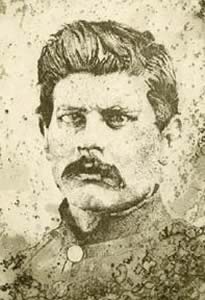
Now, when I look at Civil War photos of famous officers, their facial hair looks painted into the faces of children – just as I felt about this one of Bierce in uniform, or the one at right (after the war ended, age 22).

I’ve also been haunted by the way Walt Whitman, via his biographer Roy Morris, explained the way the last two years of the Civil War were fought:

Grant was a new type of warrior for a new kind of war, one based less on grand heroics and noble gestures than on the simple ciphering of sums he had learned in his brother’s dry-goods store. With the war now entering its fourth spring, the North had roughly twice the number of soldiers as the South, and the new Union general-in-chief intended, with Abraham Lincoln’s enthusiastic backing, to improve those odds by forcibly subtracting, one by one, the country’s dwindling stock of defenders. When enough Rebels had been subtracted, the North would win. It was as simple – and brutal — as that.

None of the pounds of Civil War lit and film I’d consumed for this chapter, none of the dry monographs or discussions on H-WAR listservs had sung that song so clearly to me. And it brought first to my mind Vietnam and body counts, the official obsession with the number of enemy dead.

I took a very deep breath.  Then I decided to try to fact-check: While I count Roy Morris as a personal avatar (nearly as much as Adam Hochschild) and adore Whitman, that kind of connection felt almost too easy. And after shaking the dust off my ears from the arguments of Civil War historians (e.g. “Grant wasn’t the butcher they said he was!”),  I was only more confused. I tried to call some trusted vets, like my friend Capt. Montalvan, for some insight, but they were all at the conventions. So I kept digging and found the shit: “The American Way of Operational Art: Attrition or Maneuver?“,  by a commander/prof at the Army War College at Fort Leavenworth. And lo and behold, perhaps I should have trusted Roy Morris.

While everyone admired the brilliant maneuver campaigns conducted by Lee, they adopted the techniques of the bloody but successful campaign of attrition waged by Grant. Professor Weigley concluded that “Despite the veneration of R.E. Lee
in American military hagiography, it was U.S. Grant whose theories of strategy actually prevailed.” ….Operational planning focused on how to best wear down the enemy’s
vast human resources. Our well known attrition concept in Vietnam  that relied on higher “body counts” as a measure of success needs no further description.”

There you have it, from the Army War College. Not just from the old poet medic, whose boyfriend broke after Antietam and begged for discharge, and said years later when asked if he ever thought about the wounded he tended back then: “I have never left them.”

(As for the word counts in the sub title: As thrilled as I am to be dreaming the book, I’m simultaneously watching my word count and worrying. So far 4500 words on this chapter, and I’m just now at New Years’ 1863. No wonder Frederic Tuten once called me a graphomaniac).

paralyzed by constant motion

Those who know me best know one of the reasons I’ve not posted in a week: this new gig I’ve taken on, on top of everything else, is making my already-overcrowded brain call out: APPROACHING MAXIMUM CAPACITY — even as it brings me back to my starting point as a NY journalist.

Now, before moving ahead to the travails of New York City or diving into centuries of military dissent, I’m pulling together a handful of headlines that mean something to my, ahem, demographic.

You’ll notice a healthy percentage of celebrity women over 40, from Debra Winger to Katie Couric. (I did have to restrain myself from throwing in a discussion of the Christie Brinkley divorce mess, though it may represent most heterosexual women’s nightmare: even if you’re a supermodel, turn 40 and the cad will find a teenager to mess around with. Though the more snarky among us may wonder at her daughter with Billy Joel daughter getting involved, since Joel’s “I Love You Just the Way You Are” was written shortly before he left the “you” in question for the then-younger Brinkley).

It all feels a little back-to-the-future at times, given my past with Women’s Enews. But I’m guessing there’s already more mention of the war in Iraq in the newsblog than there might be with someone else writing it; I was also thrilled to be able to embed video of both Dr. Who and Cyndi Lauper (as well as more sober video on Darfur).  Stop by if you like (the first link) and leave a comment.

Meanwhile, I’m supposed to be packing up my NY life, still working the Chelsea gig, and actually finishing a freelance piece about the woes of that high school I’ve been covering for the latter. Thank god for the recent news about caffeine and MS, since I’m gonna need all available crutches for  while. (That news only confirmed something I’d felt for years; I suspect anyone who saw me in the 1990s jumping around San Francisco’s Barefoot Boogie on newly popped Vivarin wouldn’t have been surprised either.)And if by the end of the month I end up dissolved into one of the boxes I’m  packing, please add water when the box arrives in Philly.

Notes from Winter Soldier on the Hill, part one

“I joined the military to kill Iraqi people,” Kristofer Goldsmith said softly in a Congressional hearing room on Thursday.

The slim young veteran, his Mohawk pulled back from his head in a half-braid, kept his eyes focused forward as news photographers scurried under the table at which he sat, snapping photographs as he continued: ” I remember on September 12, 2001, looking up at the TV screen as a 16-year-old boy, saying we should use biological weapons and eliminate the threat in the Middle East.”

Goldsmith had already shown slides of himself as a ten-year-old Boy Scout who had always wanted to join the military, but soon he had segued to a succession of images of what he had witnessed in Iraq, from “presence patrols” designed to intimidate to an image of a man with smashed face. His last few images displayed a wall with an Arabic inscription: Welcome America to the second Vietnam War.

Goldsmith was only one of ten veterans testifying before the House Progressive Caucus, designed to give legislators a taste of last March’s Winter Soldier testimony. At the event, billed as Winter Soldier on the Hill (C-SPAN video at the top link here), ten members faced the caucus, which on budget day amounted mostly to a trio of antiwar women Democrats: Lynn Woolsey, Diane Watson, and Sheila Jackson Lee.

It was May 15 — International Conscientious Objector Day, marked by Congress mostly in reverse. A Foreign Affairs Committee briefing on “Empowering the Soldier Through Technology” featured flashy brochures on the newest Stryker vehicle. Walking through the first floor of the Rayburn Office Building, I was almost blinded by the ribbons and medals on the brass showing off the new hardware.

But upstairs, soldiers who had seen combat far more recently were honoring both the day, even if they weren’t themselves CO’s, and their own pledge upon enlistment to protect the Constitution.

I sat behind the testimonial table, where the row of dark suits most had chosen gave the event a somber feel, like kaddish or a memorial. And their testimonies, describing alleged war crimes, felt similarly somber, blaming equally their own participation, command neglect, and Congressional endorsement of the occupation.

Jason Lemieux — a sweet-faced young blond whose slight build belies his strength — described “firefights in which the rules of engagement were routinely ignored.” “Unit loyalty and cameraderie,” he said, combined with “an emphasis on minimizing short term casualties,” to create an atmosphere in which troops were authorized “on numerous occasions, to shoot any Iraqi that seems suspicious,” and were told that “the command will take care of you.” (Such emphasis on taking care of one another, sometimes overriding concern for civilians, perhaps the dark side of the terribly romantic, Achilles-Patroclus soldier-bond described in such detail by Jonathan Shay.)

When Lemieux submitted incident reports showing “use of excessive force,” he said, commands either downplayed them or, in one case, actually altered the numbers.

In Tal Afar, now praised by President Bush as a great Army success, “ more innocent civilians were injured and killed by Americans than by the enemy,” said Army scout Scott Ewing, his face blank. Ewing described arriving at homes in Tal Afar that had just been blasted by Apache helicopters: “One little boy pointed to his chest,” he said. “We tried to bandage their wounds,” he said softly.

Ewing also showed a slide of a trashed home, from a day when “thousands of of soldiers were ordered to search aggressively” for weapons. Following orders, the troops kicked down doors, smashed computers, and ripped bedsheets. (In the back of the room Aaron Glantz, reporting for Democracy Now, remarked: “It looks like there’s been an armed robbery.”) Overall, said Ewing, “trashing people’s homes did not win us friends in Tal Afar.”

Part of what made this all possible, the vets said, was racism/dehumanization: a previous generation’s “gook” become “hajji,” and thus other and expendable. Geoffrey Millard, of IVAW’s D.C. chapter, showed a slide of a sedan blasted into fragments at a checkpoint; his commander, he said, had brushed it off, saying: “if these fucking hajjis learned to drive that wouldn’t happen.” He has tried, he added, to reason with his peers, for whom “KBR employees who made our food, they became hajjis.. I actually heard a guy say, I’m going over to that hajji shop to get a hajji DVD from these hajjis.” It was hard, he said, to get soldiers to see why that was wrong.

Tomorrow, I’ll post about the soldiers’ awareness of their own trauma, about the committee’s response to all this, and just a few of my own reflections. But right now, I’m haunted by the opening sentence of Millard’s statement, which feels a little like a warning of what could continue indefinitely.

“In Iraq, a year becomes a month, a month becomes a day that repeats over and over and over,” Millard said.

24 hours of irony?

Two quick bits, since I’m otherwise mostly in the 19th century today:

First, Anthony Lane gave me a new catchphrase this week, in his New Yorker review of 88 Minutes:

Avnet is setting a noble example here: if all movies were named after their running times, Hollywood would instantly become a brisker place. Would Peter Jackson have dared to put us through a Tolkien trilogy called “Nine and a Quarter Hours of Elves”? I don’t think so.

I now never have to use the phrase “Lord of the Rings” again. In Lane’s honor, I will only use his alternate title. Including for the books.

But that’s not the ironic part. That happens in July, when this happiest? place on earth opens.

Groundhog Day, with a few more clues

Last night, a meeting of a local transportation committee kind of made the past 15 months slip  away. The topic was the same as my very first story for Chelsea Now: the ARC Tunnel project, a plan by New Jersey Transit and the Port Authority to double the number of passengers crossing the river. Then as now, there was a New Jersey Transit rep with Power Point slides, ready to explain how the trains would only benefit New York and Chelsea. Then as now, there sat the opposition, renegade transit planners and passenger organizations with their own quixotic-seeming quest to remake the project.

In the interim, NJT had revised its plans significantly, but not to respond to the critics. Instead, the plan had diverged even further from its original concepts. There went those critics’ hopes to integrate the tunnel station with a regional rail system, as in Paris or Philadelphia.

My full article about the (bloody long and contentious) meeting will be in the paper, but I wanted to note some language I might never have noticed last February. The fellow from NJT rattled off a series of “impacts” now avoided by the new plan, which envisions a tunnel and station 155 feet underground that doesn’t try to link with Penn Station. “We would have had to get too close to the bottom of the buildings near the station. Both existing buildings and for future development,” he said. “The city, City Planning, asked us not to do that. So we found a better way.”

Anyone who follows New York’s development dance might have had their ears prick at that last sentence, and wondered when those conversations took place. And who it was that really asked. Given subsequent changes, that may make a difference in whether the Quixotes can slay their dragon.

Meanwhile, this movie is still in play. And thus,my current earworm is this song

that’s what you’d expect in a democracy

I’ve been a huge fan of Jeannette Winterson for more then ten years, ever since her novel Passion knocked me out of any literary or emotional comfort zone I’d ever had. I can’t say I emulate her: her brand of poetry, vision and audacity just can’t be mimicked, though I did tell students they could learn bravery from her fearless descriptions:

One woman who kept a fleet of boats and a string of cats and dealt in spices is here now, in the silent city. I cannot tell how old she may be, her hair is green with slime from the walls of the nook she lives in. She feeds on vegetable matter that snags against the stones when the tide is sluggish. She has no teeth. She has no need of teeth. She still wears the curtains that she dragged from her drawing-room window as she left.

The city in question is the same as Calvino’s, the period early enough that the narrator ends up traveling with Napoleon’s cook.

Admittedly, I’d sort of lost the thread of her work in more recent years, as it focused more on myth than I felt I could. But The Stone Gods, her newest, feels simultanously like yesterday’s news, tomorrow’s headlines, and the kind of poetry that rattles the brain. At first her dystopia, in which humans all choose to genetically stop aging whenever they wish, is hysterically funny as it horrifies:

Making everyone young and beautiful has made us all bored to death with sex. All men are hung like whales. All women are tight as clams below and inflated like lifebuoys above. Jaws are square, skin is tanned, muscles are toned, and no one gets turned on. It’s a global crisis. At least it’s a crisis in the countries of the Central Power. The Eastern Caliphate has banned Genetic Fixing, and the SinoMosco Pact does not make it available to all its citizens, only to members of the ruling party and their favorites. This way the leaders look like gods and the rest look like shit-shovellers. They never claimed to be a democracy.

The Central Power is a democracy. We all look alike, except for rich people and celebrities, who look better. That’s what you’d expect in a democracy.

I was going to quote a much later section, wherein she explains and describes the apocalypse that put her society into being, “the ugliness of how we had destroyed it, the brutal, stupid, money-soaked, drunken binge of a 21st-century world.” But I’d rather you read it in her book — which I first read in an addictive rush, pulled by her well-constructed love story/space opera/reverse-Jonathan-Swift commentary. Then I read it again, to savor the poetry, and the crystal palace Winterson has constructed.

Meanwhile, I do have one question for her. When is the film coming out, inevitably directed by the guy who dreamt up Torchwood?

the kid gets an award

Just got word from colleagues ar Community Media that my series on illegal hotels (see Selected Articles, or just google my name and “illegal hotels”) was given an award for “in depth reporting” by the New York Newspaper Association. The citation read: “These stories were well written as well as rich and
informative–putting a consistently human face on a pattern of official indifferences to the illegal hotels.”

Not sure how significant that is in the outer world, but what makes me happy: I know this year the awards were judged by a similar association in North Carolina. I would never have thought that an only-in-New-York dilemma like illegal hotels would speak to readers from that far away, where NYC’s fragile web of tenant protections might feel like a dream.

And OK, I know I’m not so much a kid. But journalism keeps me feeling like a third-grader.

500 words

Everything old is new again.

When did I first hear that Graham Greene wrote 500 words a day? Long before I thought I might try to emulate his multifaceted career:

Graham Greene had a reputation for prophecy; as early as 1955 he published “The Quiet American,” a book about the perils of American meddling in Vietnam. What seems like foresight actually came from his knack for cutting down to the heart of the matter — to appropriate the title of another of his novels, this one about Sierra Leone. It was less that he saw things coming than that he recognized the same scenarios of human foolishness and venality unfolding over and over again. If anything, his was a gift for timing, and it’s still in operation, even now, 13 years after his death. His centennial (Greene was born in 1904) arrives just as some of his most barbed political observations have acquired a brand new — and simultaneously all too familiar — relevance. Greene wrote steadily (500 words a day, every day) and as a result produced a large body of work: journalism, travel writing, novels and stories, plays, memoir, criticism. There are several fat veins in his fiction alone: the “Catholic” novels, thrillers, comic fiction like “Travels With My Aunt” and “Our Man in Havana” (also a spy novel); and harder to categorize works like “The Quiet American,” the book that more than any of his others has stamped itself upon the American imagination.

Those years ago, I mostly was impressed by his daily output — a quota I used steadily during the fiction writing days. Of course, back then I also fantasized about spending my days like Babbo: starting in a cafe, working from 11-5, and going to the theatre every night (if not, perhaps, the riotous drinking after, which ultimately killed him).

But lately, amid the press of Chelsea Now angst and other assorted disasters, that 500-words -a-day rhythm has felt impossible. Until this morning. Now I’m back where I began, albeit maybe a touch wiser (no more fantasies about some millionaire admiring my work so much that I needn’t ever work again). Just focusing on that number 500, setting it as a daily can’t miss,, as a way to amass the marble I need to get this book underway whatever happens.

Many thanks to yesterday’s commenters, who helped me acknowledge my terrified block, and reminded me how to end it. Meanwhile I’ll let myself stay inspired by Greene, who shared Joyce’s capacious Catholic sensibility if not his optimism.