Category Archives: writing

Superman vs. the VFW?

In the department of stuff you come across while looking for something else, I found this radio show (the link brings on streaming audio). Click, and you can listen to a “thousands of GI’s” protesting “racial discrimination in state hiring,” and a kind of unusual ally has their backs: Superman, who flies in to stop the state troopers ordered to fire on the vets. Not unusual, it turns out, for the Superman radio show of 1940-1951, whose stories never appeared in comics and which also featured Superman vs. The Clan of the Fiery Cross (also known as the KKK).

This is all old news to true geeks, and doubtless other better writers than I, like  Michael Chabon. But I stumbled across it while poking around for something almost no one remembers (sort of my specialty): the American Veterans Committee.

AVC was a short-lived World War II veterans’ organization whose slogan was “Citizens First, Veterans Second.” And that story about the veterans protest was grounded in the same reality that gave AVC nearly a million members at its start.

By mid-1946, when that story ran,  literally 12,000 active-duty soldiers were busy protesting at bases around the world, accusing the Truman administrationof dragging its feet in getting them home. One famously told Truman, “Give us our independence or go home to yours!”  AVC, founded by the fellow below (who is not, as he seems, Orson Welles), had on its board civil rights icon Medgar Evers and Howard Zinn, among others. Many were writers, like Benjamin Bradlee and E.J. Kahn, and doubtless others found their way to that Superman show. In September of ’46, the AVC issued a special commendation to the producers of the show for its quiet linking of veterans with “social tolerance.”

bolteun

Actually, the VFW had issued a similar award the month before, though it was for promoting “the American way” – code for crushing “commie” stuff like those  “tolerant” Superman shows, which shut down in 1951 in favor of the commie-busting TV version.  No place in the new Cold War for such thoughts — or for a veterans group that saw itself as composed of angelic troublemakers (e.g.  sleeping in L.A. streets as a housing protest).  By the time the 1954  Senate Subcommittee Hearings on Juvenile Delinquency tamed Superman completely, the AVC had mostly collapsed under a not-unfamiliar perfect storm of personality clashes, sectarian-left noise (snooze) and McCarthyism. Leaving veterans of that war to choose between the American Legion and the VFW, as odious to them as to many OEF/OIF vets now.  Its founders basically did neither, choosing instead journalism, or film, or think tanks like the Carnegie Foundation for International Peace.

What happened next is still happening: some will be in the book. Stay tuned for some character sketches.

But I wonder if it would be too much of a cheat to lede my “necessary war” chapter with that fictional scene of “thousands of GIs.” (What do you think?)

100 million castaways, demanding a home

100 million: That’s how many people who felt as I did last week. Or at least as many as stood up yesterday to say: Not in our America.

Using the skills that were so essential to the election of the current president, a handful of kids-with-broadband organized the event in cities around the country. They used email, Facebook, Twitter, and Youtube to provide a single, coordinated answer to the question so many were asking: “What do I do now?”

In Philly, the weather complied, with 70-degree temps warming the crowd of 5,000 clustered by City Hall. A group as diverse as my new city, in both ethnic composition and age. Families with small children, parents,  ministers joined folks like myself and Rachel, or the guy with the sign “No More Mr. Nice Gay.” Or like white-haired Cass McGough, 72,  who eyes were a soft match to her carved earrings, and whose sign said simply: I’M TOO OLD FOR THIS SHIT. I didn’t ask her if she knew Harvey Milk, who would have been proud of the day.

“I never thought I’d live to see a black President,” McGough grinned as the crowd gathered. “But I also never thought they’d leave us so thoroughly out of this moment, either.”

Even more heartening, to me, was the Cataldi family — South Philly types who wouldn’t have looked out of place among my Bronx relatives. Dino Cataldi brought his entire family, whose signs were among those made famous on TV and here: A GAY MARRIAGE IS JUST AS IMPORTANT AS MY FIRST, SECOND AND THIRD STRAIGHT MARRIAGE. When I asked one of them why they’d come, he said “My brother-in-law!” and pointed to Dino, a burly guy with wavy hair and muscle-y arms.

Upon learning his last name, I told Cataldi about my own Italian family, and that my coming-out process felt at best incomplete. “You wanna know how I came out? My father asked me one night at dinner, Are you queer?  Before I could say anything, my brother answered for me: He’s not queer. He’s  gay.” In other words, not creepy, not other. For all my San Francisco-bred comfort with the term ‘queer,’ the story moved me, and I wished I could tell one just like it.

Meanwhile, the kids just kept coming. I felt like I’d seen them canvassing for Obama, and they’d just gone on to the next logical goal. They were passionate about not, as columnists did,  targeting not any demographic group, not even the Mormon Church — instead targeting the indifference of those to whom think gay and lesbian civil rights are a side issue, not worth showing up for.

Now, of course, comes the hard work of making even future protests share a goal. I’ll watch, and show up when I can. This could be the 21st-century ACT-UP, though so far we don’t have the artists to show for it.

(The video is from the 1981 Secret Policeman’s Other Ball, a benefit for Amnesty International. My title’s quote from The Police feels suddenly pretty on-topic.)

Dancing with chronic illness, or when a mouse is your role model

Another cross-post, but of  work dear to me: a personal essay I first wrote a couple years back, when asked for something in the category “strange bedfellows.” You get to decide who the bedfellows are. (And if you click on the second page, you find out who the mouse is – with video!)

A blast from the recent past: Queens Boulevard had its usual martial look after a snowstorm. City snowplows had made quick corridors, long since finished off by relentless traffic, while sculpting on each side massive walls of hard-packed snow, some shaped like the cars they’d buried. On each corner, pedestrians stomped the snowdrifts into slush, occasionally even breaking the ice underneath. Great, I thought as I descended the subway stairs. Two great problems that taste great together.

Wrapped in a down coat that made me look at 41 like an overgrown toddler, I also carried a hefty backpack, the kind that turns into a rolling cart on clear ground. All of which made crossing the street a comic challenge even for a normal person, if you could really call normal a community college instructor who carried reams of paper on her back like some demented Sherpa.

The first corner took me about seven minutes, using my sight to find the first place to step and then trying to manage each slide across the bulk, hurling my pack across at the last moment. On the second corner restless students passed me, as if I  were a tree that had come half-unmoored. At the third, and mercifully last before I  got to the school doors, the drifts were smaller, but icy patches made it treacherous, passage still slow. For a normal person, navigating that snow would be tricky. But for me, whose feet felt wrapped in cotton wool on good days and almost numb on bad ones, it was asking a deaf person to sing a subtle tone poem, with broken bones the penalty for getting it wrong.

Suddenly, to my right, a petite woman of about 70, hair and lips a defiant orange, reached for my pack and offered a shoulder. I  nodded gratefully and let her lead me across the ice, letting go at the other end so quickly she  barely allowed time for me to thank her.

I waited till I  got to school to start laughing, not at the unexpected good Samaritan but at myself. This is what MS means, I  thought. You’re so slow, ladies 20 years older than beat you down the block.

I  suddenly wished some of the people who told me, “I wish I had your energy” had seen that. Being outwardly Type A had its uses – especially in the department, which thought little of piling on more classes for me to teach (an advantage for an adjunct). I  didn’t necessarily want to remind them of the limits to that energy, and they might not get why I  was laughing. Hire the handicapped, they’re fun to watch.
If twenty years of this hadn’t given me a sense of humor about it, I  thought, that fact would be a tragedy worth a telethon. Or something.
*   *    *  *

I’ve stopped teaching since then, at least for now, but mornings like today — when the mercury is teasing with near-frost –make me think of that week in Queens. Unlike most people with multiple sclerosis, my symptoms don’t get worse in the heat: it’s lower temperatures that turn my body numb, make my fatigue worse than ever, make my handwriting even more like shorthand than before. It happens indoors, too, sometimes with air conditioning: I still don’t know what Manhattan’s Community Board Five thought when they first saw this reporter drag herself along the wall of their meeting room because she couldn’t feel her legs (“Is that girl drunk?”)  When you’re diagnosed at 22 with a chronic illness, you feel life just handed you a big, sour lemon. But the key to getting through it for 20 years has been, at least for me, making lemonade (or maybe lemon martinis?) out of that lemon.

A bit of history, first: the lemon’s, and then a bit of mine.

Jean-Martin_Charcot
Multiple sclerosis means, literally, many scars — a name coined in 1868 by Dr. Jean-Martin Charcot, the father of neurology, after the death of a woman who had come to him with tremors and slurred speech. In her brain,  and those of patients like her, he found lesions smaller than a fingernail, threaded and knotted through the gray matter. He tried strychnine, electrical stimulation, injections of liquid gold, but nothing even helped.
Even for most of the twentieth century, all researchers were able to accomplish was to learn more about how the disease operates: the body’s immune system jumps up and attacks for no apparent reason the myelin sheath, the mix of proteins that line the nerves. The disease flared without apparent warning, and often receded, though each flareup often left patients worse off than before. And throughout most of the century, treatments were few and far between.  Physicians were thus, understandably, cautious in their approach. Right up until the 1980’s, many MS patients were discouraged from exercise, or regular employment.

Heuga1973
When Olympic gold-medal skier Jimmie Heuga came down with the illness in 1970, his doctors advised him to stop training and rest. But when staying sedentary didn’t help him improve, Heuga took their advice and flipped it 180 degrees, going back into training – if not at Olympic level – and starting a center for people with MS to devise structured exercise programs. In 1987, his center also began to fund research to challenge the conventional wisdom and promote a rehabilitative model for MS, one that employed exercise and physical therapy as equal partners with medication. Meanwhile,  one December night back then, I was hurtling to Manhattan frommt home in upstate New York in the middle of the night, hoping to learn what was wrong with me. As the car raced down Highway 17, the darkness was pierced in places by bursts of holiday lights, some towns decking their halls early and sending bits of red and blue across the relentless green of New York highway signs.

Continue reading

The XX factor in Obama’s transition

On my way to New York today, where I plan on seeing Jeffrey Renard Allen give a reading in my old ‘hood and cover tomorrow’s hearing for the Iraq vets that make up the Hempstead 15. But to wrap up the election thread for this week, here’s the news blog I wrote for WVFC, since I really do think that the presence of women in Obama’s team has the capacity to be quietly transformational. (For video for all of the women below, you have to click on my original post.)

It’s been eight years since we has such a new slate of advisors to look at, and ponder what their role will be in the changes afoot. The women below come from a range of backgrounds, from corporate boardrooms (several on the Forbes 100 Most Powerful Women) to California classrooms and governor’s mansions.) It would be foolish to make generalizations about a government with so many representatives of The New Menopause in key positions.

But we can dream — that our concerns will certainly not be left behind, and that midlife’s particular mix of idealism, sense of humor, deep worry, and renewed energy can both add power to the new policies being developed and ensure that they’re grounded by real-world, physical realities.

More details later, but here’s an initial honor roll, with as much video as felt appropriate:

At the helm: One of the transition team’s three co-chairs is Chicago attorney Valerie Jarrett, 51, CEO of The Habitat Company (seen above(.  A Newsweek profile in May noted: “Jarrett got her start working for Harold Washington, the city’s first black mayor. Her grandfather ran the Chicago Housing Authority in the 1940s. Obama has long turned to her for advice. When he wanted to run for the U.S. Senate, he first had to convince Michelle and Jarrett that it was a good idea. He’s been seeking her counsel ever since.”

Show him the money:  Speaking of the governor’s mansion, Michigan’s Jennifer Granholm, 49, (above with First Lady Michelle Obama) is a core member of  the newly-announced team of economic advisers. Granholm joins not just Warren Buffet but
Laura D’Andrea Tyson, dean of the Haas School of Business at the University of California at Berkeley and former chair of the President’s Council of Economic Advisors;  Anne Mulcahy, 57, Chairman and CEO, Xerox;
and Hyatt exec Penny Pritzker. 49.

    In the boardroom:

    Granholm, who was mentioned as a dark-horse vice-presidential candidate, is also on the transition team’s Advisory Board, which also includes Arizona Governor Janet Napolitano, 51,  who was profiled by Newsmix in July as a veep prospect; Susan Rice (above), 43, Brookings Institution fellow and former assistant secretary of state for African Affairs; and former EPA chair Carol Browner (below), the longest-serving administrator in the
    history of the agency, staying through both terms of the Clinton
    presidency.

    The long arms of the law: Women helping power the transition’s legal team include  general counsel (and Harvard Law school classmate) Cassandra Butts, former senior vice president for domestic policy at the Center for American
    Progress and senior adviser to Rep. Richard Gephardt (D-Mo.);  Lisa Brown, the Executive Director of the American Constitution Society, and Melody Barnes, 43, of the Center for American Progress as co-directors of agency review; and Clinton adviser Christine A. Varney, 52, as counsel for personnel.

    That different voice: Get used to another face next to the familiar Obama spokespersons Robert Gibbs and David Axelrod:  Michelle Obama’s chief of staff, 40-year-old Stephanie Cutter (seen above dueling with Chris Matthews during the campaign). During the Clinton Administration, Cutter worked as deputy communications director in both the White House and U.S. EPA.

    We at WVFC now know we have to get busy deciding who on this list we should try to interview and profile. We’d welcome readers’ comments — both about who we should talk to, and what questions you want to ask them when we do!

    — Chris L.

    A couple mornings after

    Given what I’ve posted here, you were likely expecting me to be exultant tonight. And I remain heartened, thrilled cautiously hopeful, and glad for the national results. In case you were curious about my little corner of the swing state, Ward 58 went with the wave, 69 percent for Obama — though not precinct 26, where I voted, with its Russian immigrants and many retired cops and firefighters who went for their fellow veteran.

    But I also suddenly want a T-shirt that says “We Are All Harvey Milk.”  Dan Savage, on Salon yesterday, encapsulated what Rachel and I felt:

    Tuesday night I was overjoyed.

    But Wednesday morning, reading the papers and listening to the news on the radio, my boyfriend and I — we’re boyfriends in the USA, husbands in Canada — sat at our kitchen table and had the exact same discussion we had the morning after the 2004 election: When the hell are we moving to Canada?

    The anti-gay politicking that goes on in this country is a bit like a dog whistle: Straight people can’t hear it, but it drives gay people absolutely around the bend. The importance of Obama’s victory can’t be overstated; I’m as moved as anyone else. But the passage of anti-gay marriage amendments in Arizona, Florida and, most heartbreakingly of all, California (and with overwhelming support from African-American voters), along with the passage of an anti-gay adoption amendment in Arkansas, left us both feeling shell-shocked, betrayed and angry.

    We’ll see what happens. Personally, I’m in favor of abolishing civil marriage entirely: everyone gets a legal civil union, and leave the multiple definitions of  marriage to the multiple churches.

    bayard1But it all feels like a dream deferred, as Bayard noticed 20 years ago. That video above is of the new President dancing with a woman whose wedding, seen below, may have just been invalidated. Here’s to dancing with the future, but only if all of us get to do it.

    swing state notes: election day edition

    _

    The door of the house where I live now has a hand-drawn sign, drawn by my father-in-law: NO POLITICAL SOLICITATIONS. GO AWAY. It’s been a little brutal, here in the 58th Ward: the commercials are relentless, the mail, the phone calls even more so. No matter your sympathies, the cacophony is hard to take.

    Today, the vote itself was a little subdued — and a little odd, for someone who has previously voted only in NY and California. Here, instead of the 500-foot rule I’m used to, campaigns can and do post signs right up to 10 feet from the polling place. And I’ve obviously seen too many movies: the electronic voting machine, with its paper-looking plastic and only red lights to signify my choice, looked more like one of the old machines at Coney Island than anything 21st-century.

    Unlike the hours-long lines I know are still happening in downtown Philly, the recreation center where we voted today was busy but not jammed, though its count of  290 by noon ( me, my girl and  her parents adding 286-290) still counted as record-breaking. But I’m glad we’re now headed into Center City, where election-day energy should be more in force.

    So much for the loneliness of the long-distance runner

    National Novel Writing Month? Me?

    Normally, I’m one of those skeptical of the enterprise, the idea that a jillion people checking in online and pushing out 50,000 words had anything to do with producing quality work. Still, over the years I’ve thought of doing it, worried about it, then as I put aside the idea that fiction is what I do, mostly cheered on a friend or two from way on the sidelines.

    But now, if I’m going to fulfill my contract with University of California Press, and deliver a 110,000 word nonfiction narrative by January 1 – desperate measures are called for. So when I got a note from the online community Red Room about participating in NaNoWriMo, I had one question: “Does it have to be fiction?”

    The FAQ says nothing about nonfiction, so I decided to take the plunge.

    After all, I just stopped calling myself a “novelist” three years ago. My book has plots, characters, more themes than you can shake a stick at and is as vivid as I can make it considering I can’t make shit up.

    I’m hoping that adding the structure and mass mutual cheerleading of NaNoWriMo to my daily practice will add to my determination to produce against all odds – with little else that matters. I have six chapters, a prologue and an epilogue nowhere near drafted – and that doesn’t count fact-checking and revision. It’s still impossible. I’m still determined to do it. If it takes a jillion writers in a jillion cities, well, I never did put much stock in all that stuff about the loneliness of the long-distance runner.

    “the illusion that they have rights”

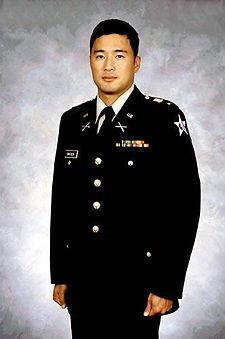
    Many people I know, especially veterans (even antiwar vets), have mixed feelings about Lieutenant Ehren Watada, whose trial was blocked today by a federal judge. Some vets saw it as a betrayal of those under his command, others that the war was best resisted from within, For other, including myself, the ambivalence stems from  the way his original decision — as the first Army officer to refuse to deploy to Iraq — was first taken up by (admittedly hard-working and sincere) front groups for front groups for the ossified sectarian left (whose militant rhetoric makes most of us giggle these days). All of which made it harder for many to simply look at what the 27-year-old college and OCS graduate was actually saying, about what he still considers an illegal order. Thank god for non-front groups like CCW and Vets for Peace, from whom I got the news today.

    Those of you who’ve checked this page out more than once (why? Please comment, and lemme know!) know I’ve mostly been mired in the previous century, and mostly enmeshed in the lives of the Civil War vets who years later spoke out — opposing the annexation of what would become Watada’s home state, and joining in a grand effort to stop the Philippine War. “It is nothing but a wanton stretch of power. It is
    lust for power and greed for land veneered with the tawdriness of false humanity,” wrote one, by then a U.S. senator as well as a survivor of the Battles of Shiloh and Spotsylvania. His sentiment echoes Watada’s, but the quote that gave this post a title is from far earlier, because I think it’s more relevant to what Watada faces next.

    The judge in the case, Benjamin Settle, only dismissed three of the five counts against Watada:

    Settle barred the military from retrying Watada on charges of missing his redeployment to Iraq, taking part in a news conference and participating in a Veterans for Peace national convention.

    But the court did not rule out the possibility that the Army, after considering legal issues, could retry Watada on two counts of conduct unbecoming an officer resulting from his media interviews.

    Watada’s attorney sensibly told the press that he hopes to get those charges dropped. That could be done without explicit vindication of Watada’s position. But part of me wants to see that second trial, if only to prove Sylvanus Thayer wrong.

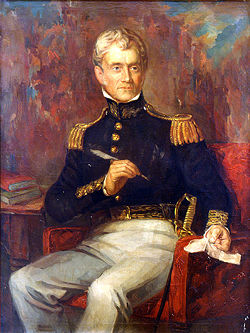
    Thayer, the “Father of West Point,” in 1819 blamed a early mutiny at the academy on “the erroneous and unmilitary impressions of the Cadets that they have rights to defend.”

    Someone should write a book about soldiers and vets who hold on to that “erroneous” impression. Oh right, I forgot.

    Congratulations, Lt. Watada. When can I give you a call?

    while I was gone

    That’s also the title of a terrific, underrated novel by Sue Miller, which kept me up reading a few nights during my long interregnum from this blog. Few writers — maybe Tolstoy or Lynne Sharon Schwartz –  combine as well gripping suspense and an incredible amount of thoughtfulness about marriage.

    I’d kept thinking I would do an entry when I was finally free of my the 19th century — but like Marx or Baudelaire, I’m finding that exit is taking far longer than I’d hoped.

    Part of the delay happened because my responsibilities at my paid blog gig changed, in a way that takes up more of my time and brain space than I like. (See the posts following this one for details.)

    But the loong gestation was perhaps more the nature of the material itself — including two frigging new characters that nosed in insistently, kind of at the last minute. Just as I was about to write, “Dissent from soldiers was confined to diaries then,” along came..

    Benjamin Grierson (left), longtime commander of the Buffalo Soldiers, and Silas Soule (below right),  who came from one of those fine raging-abolitionist families (his brother named after William Lloyd Garrison).

    I’d thought of pasting, and will at the end of this post, Soule’s testimony to an Army inquiry about Colorado’s Sand Creek Massacre, which he answers in classic soldier’s understatement.

    Were these families, women and children, scalped and mutilated?

    Yes, sir. They were.

    Soule was far less understated in a letter to a fellow soldier:  “I tell you Ned it was hard to see little children on their knees have their brains beat out by men professing to be civilized.

    Continue reading

    older cities of dreams

    Which of these venerable, beloved by artists (and thus too costly for most), old streets came first?

    Philly’s Old City, where I sit now (in a cafe I already love)?

    Or its jealous cousin in my hometown?

    I suspect the latter, due to the Dutch assault on the Lenape land predating the days of William Penn.

    However, both bow down to their ancestor above, in the country of *my* particular forefathers. I’d love to live there too.