Category Archives: veterans

“the illusion that they have rights”

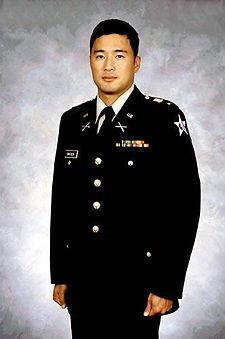
Many people I know, especially veterans (even antiwar vets), have mixed feelings about Lieutenant Ehren Watada, whose trial was blocked today by a federal judge. Some vets saw it as a betrayal of those under his command, others that the war was best resisted from within, For other, including myself, the ambivalence stems from  the way his original decision — as the first Army officer to refuse to deploy to Iraq — was first taken up by (admittedly hard-working and sincere) front groups for front groups for the ossified sectarian left (whose militant rhetoric makes most of us giggle these days). All of which made it harder for many to simply look at what the 27-year-old college and OCS graduate was actually saying, about what he still considers an illegal order. Thank god for non-front groups like CCW and Vets for Peace, from whom I got the news today.

Those of you who’ve checked this page out more than once (why? Please comment, and lemme know!) know I’ve mostly been mired in the previous century, and mostly enmeshed in the lives of the Civil War vets who years later spoke out — opposing the annexation of what would become Watada’s home state, and joining in a grand effort to stop the Philippine War. “It is nothing but a wanton stretch of power. It is
lust for power and greed for land veneered with the tawdriness of false humanity,” wrote one, by then a U.S. senator as well as a survivor of the Battles of Shiloh and Spotsylvania. His sentiment echoes Watada’s, but the quote that gave this post a title is from far earlier, because I think it’s more relevant to what Watada faces next.

The judge in the case, Benjamin Settle, only dismissed three of the five counts against Watada:

Settle barred the military from retrying Watada on charges of missing his redeployment to Iraq, taking part in a news conference and participating in a Veterans for Peace national convention.

But the court did not rule out the possibility that the Army, after considering legal issues, could retry Watada on two counts of conduct unbecoming an officer resulting from his media interviews.

Watada’s attorney sensibly told the press that he hopes to get those charges dropped. That could be done without explicit vindication of Watada’s position. But part of me wants to see that second trial, if only to prove Sylvanus Thayer wrong.

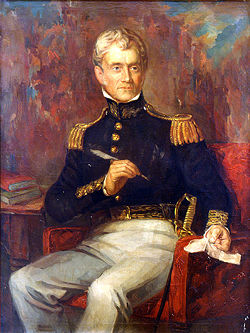
Thayer, the “Father of West Point,” in 1819 blamed a early mutiny at the academy on “the erroneous and unmilitary impressions of the Cadets that they have rights to defend.”

Someone should write a book about soldiers and vets who hold on to that “erroneous” impression. Oh right, I forgot.

Congratulations, Lt. Watada. When can I give you a call?

while I was gone

That’s also the title of a terrific, underrated novel by Sue Miller, which kept me up reading a few nights during my long interregnum from this blog. Few writers — maybe Tolstoy or Lynne Sharon Schwartz –  combine as well gripping suspense and an incredible amount of thoughtfulness about marriage.

I’d kept thinking I would do an entry when I was finally free of my the 19th century — but like Marx or Baudelaire, I’m finding that exit is taking far longer than I’d hoped.

Part of the delay happened because my responsibilities at my paid blog gig changed, in a way that takes up more of my time and brain space than I like. (See the posts following this one for details.)

But the loong gestation was perhaps more the nature of the material itself — including two frigging new characters that nosed in insistently, kind of at the last minute. Just as I was about to write, “Dissent from soldiers was confined to diaries then,” along came..

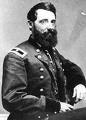
Benjamin Grierson (left), longtime commander of the Buffalo Soldiers, and Silas Soule (below right),  who came from one of those fine raging-abolitionist families (his brother named after William Lloyd Garrison).

I’d thought of pasting, and will at the end of this post, Soule’s testimony to an Army inquiry about Colorado’s Sand Creek Massacre, which he answers in classic soldier’s understatement.

Were these families, women and children, scalped and mutilated?

Yes, sir. They were.

Soule was far less understated in a letter to a fellow soldier:  “I tell you Ned it was hard to see little children on their knees have their brains beat out by men professing to be civilized.

Continue reading

of body counts and word counts

The quietude here has been almost a good sign: I’m finally sucked in by the book.  I walk to the gym thinking about Donelson Caffery and Lewis Douglass, sleep followed by the ghost of Bierce. I then have to remember to work in the data I sort of started with, about desertion and dissent and the size and strength of armies.

Now, when I look at Civil War photos of famous officers, their facial hair looks painted into the faces of children – just as I felt about this one of Bierce in uniform, or the one at right (after the war ended, age 22).

I’ve also been haunted by the way Walt Whitman, via his biographer Roy Morris, explained the way the last two years of the Civil War were fought:

Grant was a new type of warrior for a new kind of war, one based less on grand heroics and noble gestures than on the simple ciphering of sums he had learned in his brother’s dry-goods store. With the war now entering its fourth spring, the North had roughly twice the number of soldiers as the South, and the new Union general-in-chief intended, with Abraham Lincoln’s enthusiastic backing, to improve those odds by forcibly subtracting, one by one, the country’s dwindling stock of defenders. When enough Rebels had been subtracted, the North would win. It was as simple – and brutal — as that.

None of the pounds of Civil War lit and film I’d consumed for this chapter, none of the dry monographs or discussions on H-WAR listservs had sung that song so clearly to me. And it brought first to my mind Vietnam and body counts, the official obsession with the number of enemy dead.

I took a very deep breath.  Then I decided to try to fact-check: While I count Roy Morris as a personal avatar (nearly as much as Adam Hochschild) and adore Whitman, that kind of connection felt almost too easy. And after shaking the dust off my ears from the arguments of Civil War historians (e.g. “Grant wasn’t the butcher they said he was!”),  I was only more confused. I tried to call some trusted vets, like my friend Capt. Montalvan, for some insight, but they were all at the conventions. So I kept digging and found the shit: “The American Way of Operational Art: Attrition or Maneuver?“,  by a commander/prof at the Army War College at Fort Leavenworth. And lo and behold, perhaps I should have trusted Roy Morris.

While everyone admired the brilliant maneuver campaigns conducted by Lee, they adopted the techniques of the bloody but successful campaign of attrition waged by Grant. Professor Weigley concluded that “Despite the veneration of R.E. Lee
in American military hagiography, it was U.S. Grant whose theories of strategy actually prevailed.” ….Operational planning focused on how to best wear down the enemy’s
vast human resources. Our well known attrition concept in Vietnam  that relied on higher “body counts” as a measure of success needs no further description.”

There you have it, from the Army War College. Not just from the old poet medic, whose boyfriend broke after Antietam and begged for discharge, and said years later when asked if he ever thought about the wounded he tended back then: “I have never left them.”

(As for the word counts in the sub title: As thrilled as I am to be dreaming the book, I’m simultaneously watching my word count and worrying. So far 4500 words on this chapter, and I’m just now at New Years’ 1863. No wonder Frederic Tuten once called me a graphomaniac).

what we write about when we write about war

My current bookshelf is weirdly focused. The collection might seem a bit scary, if you didn’t know I was writing a book. (“What kind of obsessed veteran lives here?”)  When you know, some of what’s here might then seem obvious: David Cortright’s Soldiers in Revolt, Kingston’s Veterans of Peace anthology, the trauma stuff ( Jonathan Shay’s iconic Achilles in Vietnam and Odysseus in America, Judith Herman’s Trauma and Recovery) and the war-specific guides: Rich Man’s War/Poor Man’s Fight, The Last True Story I’ll Ever Tell, The New Veteran ( by Charles G. Bolte, c1945).

Lately, i’ve been poring over the biographies and novels on the shelf, looking for guidance in the writing. (And kicking myself for never making the annual writers’ conference at the William Joiner Center.) Roy Morris’ invaluable  Ambrose Bierce: Alone in Bad Company, Adam Hochschild’s King Leopold’ s Ghost, and James Tobin’s Ernie Pyle’s War seamlessly join narrative detail with the swing of history. So do Panther in the Sky, James Alexander Thom’s fictional biography of Tecumseh, and Joe Haldeman’s peerless 1968. (That last, however, is a bit like reading Joan Didion: you read it to be spun around by the master, not with the illusion you can write like that. )

But given the period I’m dealing with this week, I’ve been brought back to studying with Doctorow. More specifically, The March. In his 2005 review, Walter Kirn attaches to one of its core themes, which in some ways is half of mine:

The rampant destructiveness of Sherman’s march is, of course, the stuff of high school textbooks, but what isn’t so obvious is the way that destruction transfigures and transforms, pulverizing established human communities and forcing the victims to recombine in new ones. Inside the churning belly of Doctorow’s beast, individuals shed their old identities, ally themselves with former foes, develop unexpected romantic bonds and even seem to alter racially. Yes, war is hell, and “The March” affirms this truth, but it also says something that most war novels leave out: hell is not the end of the world. Indeed, it’s by learning to live in hell, and through it, that people renew the world. They have no choice.

Unlike the civilians in Doctorow’s novel, the soldiers in my story are all doing just that — either by challenging the discipline that makes war possible, or by speaking out either during service or afterward. Call it a coda to that central theme. But that’s not why I’m looking at Doctorow’s novel again.

Instead, I’m looking at a far more technical issue; how does he keep the arcs of four major characters, and an equal number of minor ones, flowing ahead together for the reader?  Can watching his transitions, his narrative spins, help me do the same, at least for this chapter? Can the transformation of Ambrose Bierce from 20-year-old hothead to Homeric figure/journalist/mystery shape one arm of this March while still getting readers interested in the parallel transformations of Lewis Douglass, sailor Edward Strickland in Florida, little Quakers like Jesse Macy? Let alone Donelson Caffery, who became an ardent opponent of the Philippine war after not only preceding Bierce at the battle of Shiloh, but seeing his Confederate commander go down at that field with the funny name, which witnessed hand-to-hand fighting that sounds like tales from 1994 Rwanda?* (Leaving aside the related question of how to write honestly about it all as a non-veteran, and to keep it bearable without trivializing it.)

Some of it is making them vivid, not just externally but with some characteristic mental tropes/phrases. But most of those, the bits of dialogue that fill Doctorow’s work and stayed with me, are from fictional characters. Except for this historic meeting aboard a ship off the South Carolina coast, so dramatically right that it’s hard to believe it happened:

The long head was in proportion to the size of the man, but intensifying of his features, so that there was a sott of ugly beauty to him, with his wide month, deeply lined at the corners….What is important, the President was saying in conclusion, is that we do not confront them with terms so severe that they continue the war in their hearts. We want the insurgents to regard themselves as Americans.

Doctorow doesn’t use quotes here, smartly not putting words in the mouth of frigging Abraham Lincoln. (I checked; that poetry about “the war in their hearts” is a Vietnam-era formulation for sure.) He does well, considering his source (Sherman’s memoirs):

Lincoln was full and frank in his conversation, assuring me that in his mind he was all ready for the civil reorganization of affairs at the South as soon as the war was over; and he distinctly authorized me to assure Governor Vance and the people of North Carolina that, as soon as the rebel armies laid down their arms, and resumed their civil pursuits, they would at once be guaranteed all their rights as citizens of a common country; and that to avoid anarchy the State governments then in existence, with their civil functionaries, would be recognized by him as the government de facto till Congress could provide others.

I know, when I left him, that I was more than ever impressed by his kindly nature, his deep and earnest sympathy with the afflictions of the whole people, resulting from the war, and by the march of hostile armies through the South; and that his earnest desire seemed to be to end the war speedily, without more bloodshed or devastation, and to restore all the men of both sections to their homes. In the language of his second inaugural address, he seemed to have “charity for all, malice toward none,” and, above all, an absolute faith in the courage, manliness, and integrity of the armies in the field. When at rest or listening, his legs and arms seemed to hang almost lifeless, and his face was care-worn and haggard; but, the moment he began to talk, his face lightened up, his tall form, as it were, unfolded, and he was the very impersonation of good-humor and fellowship. The last words I recall as addressed to me were that he would feel better when I was back at Goldsboro’. We parted at the gangway of the River Queen, about noon of March 28th, and I never saw him again. Of all the men I ever met, he seemed to possess more of the elements of greatness, combined with goodness, than any other.

Doctorow lets his own beloved Wrede Sartorius, brought in to witness the meeting, to echo Sherman’s description and to more explicitly say what many think when we see those later, brooding portraits:

Perhaps his agony was where his public and private beings converged. Wrede lingered on the deck. The moral capacity of the President made it difficult to be in his company…..His affliction might be the wounds of the war he’d gathered into himself, the amassed miseries of this torn-apart country made incarnate.

Doctorow has, I think, also added a dash of Walt Whitman, the Civil War’s Homer, who wrote after watching Lincoln’s second inaugural procession the he could see

the lines, indeed, of vast responsibilities, intricate questions, and the demands of life and death, cut deeper than ever into his dark brown face; yet all the old goodness, tenderness, sadness, and canny shrewdness, beneath the furrows.

That last except courtesy of  Roy Morris (again), in his The Better Angel: Walt Whitman and the Civil War. Morris quotes openly from both Whitman and Bierce in describing the events of their iives; I wonder if I can do something similar, while somehow using a contemporary voice to better expose all those  gathered wounds to air. Or is my object to let their voices do it, and get out of the way?

We write about war, as Kirn said, as a way of writing about our lives. But there’s got to be a way to let those experiences be what they are, for a reader, before storytellers and politicians start yammering about what it all means.

* Speaking of Rwanda — and of learning from the master—check out this incredible Christian Science Monitor piece by my friend Jina Moore. If you ever need a reminder about what journalism can do, go re-read it.

Cross-posted at Devourer of Books.
Quakers in uniform: oxymoron, or profound truth?

I spend so much time celebrating the courage of soldiers that some might wonder where the old peacenik had got to. (If some old classmate from Binghamton stumbled here, e.g., what they might remember most is my play Too Many Martyrs, a  melodrama about the U.S.-to-Canada draft resister underground railroad.) But as I construct my Civil War narrative, I’m also cheered to report some appropriately complicated pacifist characters, whose deep abolitionist beliefs made them conflicted about what was that century’s “good war.” An early glimpse:

  • Jesse Macy, who may have invented the character of CO medic. Offered the role of cook and horseman when he shared his membership in the Society of Friends, he refused, insisting he would train and travel with his unit only if he could work for the Army surgeons, and thus help care for the war’s relentless casualties.
  • George Garrison, who after the Emancipation Proclamation went so far as to enlist and become an officer with the Massachusetts 55th Division of the United States Colored Troops  (USCT). Thus breaking the heart of his father Lloyd, the renowned abolitionist, (note to picky historians:  I know the Garrisons weren’t exactly Quakers, but Lloyd himself characterized their paths as “nearly identical.”) Garrison endured enough rough strife to explain how afterward, despite numerous efforts to get him established in business, he drifted from job to job, interested mostly in veterans’ reunions. (Unfortunately for my narrative, he did not join fellow USCT veterans Charles Francis Adams and Lewis Douglass at the end of the century in the Anti-Imperialist League of America, also known as U.S. Out of the Philippines.
  • Of course, some were less conflicted, and offer more or less the classic Quaker story. Cyrus Pringle, whose travails in 1863 Vermont eventually came to the attention of Washington. Before then, as Wikipedia notes, “Refusing to perform all military duty, he was subjected to severe
    discipline. The Friends were kept for days in the guardhouse in company
    with drunks and criminals. Finally, on October 3, 1863, at Culpepper, Doctor Pringle was staked to the ground, with his arms outstretched and his legs cruelly racked; he was left in this position for hours, until ‘so weak he could hardly walk or perform any exertion.’  He was even threatened with death if he would not give up, but his only reply was, ‘It can but give me pain to be asked or required to do anything I believe to be wrong.’ After a day of extreme pain he wrote in hisdiary, ‘This has been the happiest day of my life, to be privileged to fight the battle for universal peace.’ “

These ghosts mingle with those whose journeys had nothing to do with Quaker qualms, sharing their horror at the blood soaked into the ground during those grueling four years. And — just as much earlier and later – they didn’t inspire the kind of revulsion from their fellow soldiers that many civilians assume. Macy even writes that by the end, when he was standing up to his command just as his unit was joining Sherman’s march through Geotgia,  his peers “had agreed to stand together in forcible resistance in case extreme measures were instituted against me. I could not ask for treatment more uniformly respectful and friendly than that which I received from officers and men alike in Sherman’s army while on the March to the Sea.”  Integrity respected, perhaps above all.

Not so unlike the respect shown by Major William Kunstler to C.O. medic Lew Ayres during World War II, or by the anonymous soldiers in Baquba, Iraq, who shot surreptitious peace signs to the authors of the early underground blog Fight to Survive. I don’t mean to imply it’s all kumbaya, to minimize the real differences; but it’s kind of cool to see how long that respect has existed, among factions traditionally painted as enemies.

diving into the wreck

A post of re-entry: the task of moving while doing the newsblog for Women’s Voices and finishing up my responsibilities at Chelsea Now was pretty punishing, and pushed me almost entirely away from the book. Now I sit on the back porch of my in-laws’ house in northeast Philadelphia, birds chatting away about the unexpected cool weather, the occasional visiting bunny rabbit not yet making his confused appearance. (Think of it as Bread Loaf w/o the fellow writers, or the alcohol.)

And after some necessary re-immersion, I may be finally ready to commence my necessary 20-week writing marathon, treating this place as an enforced writers’ colony. At least mostly. (I do still want to see if I can find someone to hire me to write about   IVAW at one of the political conventions at the end of this month.)

When I thought of writing this post, I knew the title, and found the Adrienne Rich poem a bigger gift than I’d thought. Though her quarry was patriarchy, the psychological/creative task feels the same:

First having read the book of myths,
and loaded the camera,
and checked the edge of the knife-blade,
I put on
the body-armor of black rubber
the absurd flippers
the grave and awkward mask.
I am having to do this
not like Cousteau with his
assiduous team
aboard the sun-flooded schooner
but here alone….

I came to explore the wreck.
The words are purposes.
The words are maps.
I came to see the damage that was done
and the treasures that prevail.
I stroke the beam of my lamp
slowly along the flank
of something more permanent
than fish or weed

the thing I came for:
the wreck and not the story of the wreck
the thing itself and not the myth
the drowned face always staring
toward the sun
the evidence of damage
worn by salt and away into this threadbare beauty
the ribs of the disaster
curving their assertion
among the tentative haunters.

“The wreck and not the story of the wreck.” Multiple meanings in my project, since so many of my characters are also storytellers. Not to get distracted even by Ambrose Bierce’s powerful description of Shiloh, or Fred Marchant’s incredible Vietnam poems — though all are useful, even essential in undercutting the predominant story of gung-ho, mindless soldiering.

My task here is that weird combination of journalist, historian (not one but try, like my role model Adam Hochschild, to play one on TV) and novelist. To look closely at my characters, at where their lives fit into the shape of their wars (the ones they fought in, the ones they dissented about, not always the same). And now, the trickiest part: to be Dante’s Virgil. To tell their stories, and the overall story, smoothly enough so that it goes down now like hard medicine but like whipped cream. Sounds easy, doesn’t it?

We circle silently
about the wreck
we dive into the hold.

we are the half-destroyed instruments
that once held to a course
the water-eaten log
the fouled compass

We are, I am, you are
by cowardice or courage
the one who find our way
back to this scene
carrying a knife, a camera
a book of myths
in which
our names do not appear.

Part two, notes from Winter Soldier on the Hill

“You’re telling us that what we’re doing there is bloodying our hands,” Representative Maxine Waters told members of Iraq Veterans Against the War halfway through Thursday’s hearing, also known as Winter Soldier on the Hill.

Waters added that much of the information she was hearing was new, and that it felt truer than all the administration’s happy-talk about Iraq, all the hopeful phrases meant to encapsulate this or that stage of the war. After ” shock and awe, last throes, clear and hold, the surge,” she said, “We have had enough.”

As I reported in part one, by then the handful of House members at the informal session had heard first-hand accounts of kicking in doors, shoot-first policies, abuse of detainees and other hazards of occupation. All had been laced with searing self-criticism on the soldiers’ part, as when Geoffrey Millard described soldiers’ racism and others said that many “did not have any intent of helping the Iraqis.” They had also heard Millard voice IVAW’s three demands: immediate withdrawal of troops, full health care for all troops upon return, and reparations to the Iraqi people for the spoliation of their country.

The veterans were also frank about their internal wounds. Many, like Kristofer Goldsmith, had attempted suicide; many, perhaps most, others had “self-medicated” with alcohol or drugs. Yet those same effects could make one ineligible for VA healthcare or the GI Bill, they noted, depending on branch of service or the language of your discharge. Kristofer Goldsmith, once a boy scout dreaming of becoming a soldier, said that his general discharge blocks him from education benefits; Millard, despite nine years of service, was ineligible because all of his service was with the National Guard. “We’ll fix that,” said Rep. Waters. “We have to.”

Perhaps appropriately for International Conscientious Objector Day, many spoke frankly of what they called the “dehumanization” inherent in current military training. Goldsmith described the perhaps immortal basic-training moment when the drill sergeant screams, “What makes the grass grow?” and expects to hear, “Blood, sergeant! Blood makes the grass grow!” As the link indicates. that phrase is already the title of a film about resisters from the first Gulf War. When I interviewed one star of that film, Aimee Allison, she described that chant as a turning point for her in 1991, which began her realization that she was a CO.

Another soldier on the panel  described watching a commander belittle someone undergoing that realization, using irrelevant hypothetical questions such as: What would you do if Al Qaeda went in and raped your wife, murdered your children, etc? The soldier looked up and asked why the commander would ask such a question: “Do we do that to them?”

After taking a break to vote on the war funding bill (with a surprising result, as it turned out, the committee began to ask the vets many questions— some personal, many policy-oriented.

Asked about the effects of the Abu Ghraib scandal on their work, the veterans were sober. “I was manning a checkpoint the day it broke,” said Adam Kokesh, and he wondered what it made him seem to the Iraqis meeting his eyes. James Gilligan said that detainee treatment overall has damaged any relationship possible with ordinary Iraqis: “ When you meet an Iraqi teenager on the street,” he said, “they know what their cousins, their uncles have been through” at the hands of the U.S. military. “That makes it hard.”

I confess I didn’t keep adequate notes on many of the policy discussions, especially when Woolsey and the others asked the vets to administration talking points, such as The surge is working, or We’re fighting Al Qaeda, or If we pull out now there will be chaos. To the last, Adam Kokesh said simply: ““Every specter we raise increases the longer we’re there,” meaning that each day of occupation increases terrorism and the prospect of a bloodbath.

Captain Luis Carlos Montalvan – whose testimony was the most blatant in blaming  specific generals, including the media rock star General David Petraeus, for much of the current chaos — was equally damning about “a misconception that staying in Iraq is vital to our national security interests…an assumption made time and time again by people at the highest echelons” that the occupation should continue “with no end state in sight.”

In any event, Montalvan said, while it may not be pretty, “my belief is that will force the hand of the sectarian forces to work things out on their own.”

Immediately after the hearing, active-duty Sergeant Mathis Chiroux publicly declared his refusal to deploy to Iraq, which event became the lede in most news stories about the day (including this terrific piece by my friend Karin at Agence-France Press). But to me, the real news came toward the end of the hearing itself, when Rep. Watson pledged to bring the veterans back to more formal House committees, such as Foreign Affairs and Homeland Security. There, she said, they would have an opportunity to testify under oath, something neither the 1971 Winter Soldiers or those testifying in March had done. “Are you willing to return,” she asked each in turn, and to bring documentation to support their testimonies?

Nothing, of course, was said about bringing the group before the Senate. I wonder if that will happen eventually — and whether the dissension among the Senate’s Vietnam veterans, limned so well in this week’s piece about John McCain‘s war, will be eased or intensified when they hear it.

Notes from Winter Soldier on the Hill, part one

“I joined the military to kill Iraqi people,” Kristofer Goldsmith said softly in a Congressional hearing room on Thursday.

The slim young veteran, his Mohawk pulled back from his head in a half-braid, kept his eyes focused forward as news photographers scurried under the table at which he sat, snapping photographs as he continued: ” I remember on September 12, 2001, looking up at the TV screen as a 16-year-old boy, saying we should use biological weapons and eliminate the threat in the Middle East.”

Goldsmith had already shown slides of himself as a ten-year-old Boy Scout who had always wanted to join the military, but soon he had segued to a succession of images of what he had witnessed in Iraq, from “presence patrols” designed to intimidate to an image of a man with smashed face. His last few images displayed a wall with an Arabic inscription: Welcome America to the second Vietnam War.

Goldsmith was only one of ten veterans testifying before the House Progressive Caucus, designed to give legislators a taste of last March’s Winter Soldier testimony. At the event, billed as Winter Soldier on the Hill (C-SPAN video at the top link here), ten members faced the caucus, which on budget day amounted mostly to a trio of antiwar women Democrats: Lynn Woolsey, Diane Watson, and Sheila Jackson Lee.

It was May 15 — International Conscientious Objector Day, marked by Congress mostly in reverse. A Foreign Affairs Committee briefing on “Empowering the Soldier Through Technology” featured flashy brochures on the newest Stryker vehicle. Walking through the first floor of the Rayburn Office Building, I was almost blinded by the ribbons and medals on the brass showing off the new hardware.

But upstairs, soldiers who had seen combat far more recently were honoring both the day, even if they weren’t themselves CO’s, and their own pledge upon enlistment to protect the Constitution.

I sat behind the testimonial table, where the row of dark suits most had chosen gave the event a somber feel, like kaddish or a memorial. And their testimonies, describing alleged war crimes, felt similarly somber, blaming equally their own participation, command neglect, and Congressional endorsement of the occupation.

Jason Lemieux — a sweet-faced young blond whose slight build belies his strength — described “firefights in which the rules of engagement were routinely ignored.” “Unit loyalty and cameraderie,” he said, combined with “an emphasis on minimizing short term casualties,” to create an atmosphere in which troops were authorized “on numerous occasions, to shoot any Iraqi that seems suspicious,” and were told that “the command will take care of you.” (Such emphasis on taking care of one another, sometimes overriding concern for civilians, perhaps the dark side of the terribly romantic, Achilles-Patroclus soldier-bond described in such detail by Jonathan Shay.)

When Lemieux submitted incident reports showing “use of excessive force,” he said, commands either downplayed them or, in one case, actually altered the numbers.

In Tal Afar, now praised by President Bush as a great Army success, “ more innocent civilians were injured and killed by Americans than by the enemy,” said Army scout Scott Ewing, his face blank. Ewing described arriving at homes in Tal Afar that had just been blasted by Apache helicopters: “One little boy pointed to his chest,” he said. “We tried to bandage their wounds,” he said softly.

Ewing also showed a slide of a trashed home, from a day when “thousands of of soldiers were ordered to search aggressively” for weapons. Following orders, the troops kicked down doors, smashed computers, and ripped bedsheets. (In the back of the room Aaron Glantz, reporting for Democracy Now, remarked: “It looks like there’s been an armed robbery.”) Overall, said Ewing, “trashing people’s homes did not win us friends in Tal Afar.”

Part of what made this all possible, the vets said, was racism/dehumanization: a previous generation’s “gook” become “hajji,” and thus other and expendable. Geoffrey Millard, of IVAW’s D.C. chapter, showed a slide of a sedan blasted into fragments at a checkpoint; his commander, he said, had brushed it off, saying: “if these fucking hajjis learned to drive that wouldn’t happen.” He has tried, he added, to reason with his peers, for whom “KBR employees who made our food, they became hajjis.. I actually heard a guy say, I’m going over to that hajji shop to get a hajji DVD from these hajjis.” It was hard, he said, to get soldiers to see why that was wrong.

Tomorrow, I’ll post about the soldiers’ awareness of their own trauma, about the committee’s response to all this, and just a few of my own reflections. But right now, I’m haunted by the opening sentence of Millard’s statement, which feels a little like a warning of what could continue indefinitely.

“In Iraq, a year becomes a month, a month becomes a day that repeats over and over and over,” Millard said.

a villanelle for betrayal

I can’t believe it’s taken me this long to note this piece by the incredible Col. Ann Wright. Its title skittered over military history listservs, but in question form — Is There an Army Cover-Up of Rape and Murder of Women Soldiers? — that made it appear academic, and not the rigorous prosecutorial brief that it is.

When you talk to military rape survivors, and their families, they are usually more anxious to describe not what their attacker did but what their command did or did not do. With the military mission top priority, commands often stint prosecutions (which require scarce investigative resources and the risk of losing soldiers esteemed by their peers). This was true in peacetime, when I wanted to write a book called “Twice Betrayed,” about the way victim/survivors felt about that fact. To them, the second betrayal cut longer than the first.

More brilliant journalists than I have kept on that case throughout this war; Wright’s piece is a careful reminder not to look away. To me, to whom so much is painfully familiar, it reads like a villanelle: a poem whose themes resound more and more with each echo.

I’ve reproduced below some of the villanelle-bits of Wright’s brief that highlight the double betrayal (go to the piece for the supporting facts)

The Army attempted several explanations, but each was debunked by Mrs. Priest and by the 800 pages of materials provided by the Army itself. The Army now says Tina used her toe to pull the trigger of the weapon that killed her. The Army never investigated Tina’s death as a homicide, but only as a suicide.

Rape charges against the soldier whose sperm was found on her sleeping bag were dropped a few weeks after her death. He was convicted of failure to obey an order and sentenced to forfeiture of $714 for two months, 30 days restriction to the base and 45 days of extra duty.

The person identified in the diary as the rapist was charged by the Army with rape after her death. Many who knew her did not believe she shot herself, but there is no evidence of a homicide investigation by the Army.

—-

The sergeant pleaded guilty to drinking in a war zone, drunken driving and consensual sodomy with an underage, incapacitated junior soldier to whom he had supplied alcohol. A military judge ruled McKinney’s death was an accident and the sergeant was sentenced to 13 months imprisonment, demotion to private, but he would not be discharged from the Army.

Peterson reportedly objected to the interrogation techniques used on prisoners and refused to participate after only two nights working in the unit known as the cage. Members of her unit have refused to describe the interrogation techniques Peterson objected to. The military says all records of those techniques have now been destroyed. … She was also sent to suicide-prevention training. On the night of September 15, 2003, Army investigators concluded she shot and killed herself with her service rifle. Family members challenge the Army’s conclusion.

—–

Col. Wright is a heroine in my book (literally), who gave up a lifetime career when the Iraq war made contined honorable service untenable. Her editorials should be being published by the Times (or at least the Huffington Post), not relegated to the essential but marginalized Truthout.

neither soldier nor civilian

Yesterday, I went to a benefit performance of the Off- Broadway show “The Castle,” in which four former inmates tell their stories and praise The Fortune Society. For 40 years, the society has worked on such folks’ behalf, and ten years ago bought the castle where this movie was filmed and turned it into a halfway house. The group’s director, Jo Ann Page, told me last week that the play felt like a return to the origins of the group, born of founder David Rothenberg’s play “Fortune and Men’s Eyes.” “David was saying, ‘look—we started on Broadway, now we’re back almost on Broadway!’ And meanwhile, one of the players was saying, ‘Last year I was in lockup. Now I’m Off-Broadway!’”

The play itself is a touch didactic – while Variety called it “immensely eloquent,” the Times said drily, “This is theatre verging on a public service announcement” – but it made me think about something I’d noticed since I first started covering prison stuff: the extent to which these ex-offenders reminded me of so many of the GI’s I used to counsel. Serious people, who’ve been through something I can’t claim to share (and likely wouldn’t want to).

That impression was redoubled last night by a conversation I had with the wife of one of the leads in the play, herself a graduate of the Bedford Hills Correctional Facility. After we bonded talking about a friend of hers I’d written about, she spoke of some programs at the prison that had been restored with the help of “some civilians.” I’d not known that former prisoners also talked about “civilians.”

“Are you a veteran?” hotline callers used to ask me, back in the day. “You just seem like you understand.” Not a soldier, I would reply softly, but maybe not quite a civilian either. Maybe my task as a writer is to hover in that not-quite-civilian zone. Because, as my brilliant friend Jine pointed out a few weeks ago, the most important thing journalists can do is not the stories we tell, but that we listen.