Last night, it was a little disorienting to put up the post below at my other shop; when I started blogging in 2004, there was no subject on which I spent more…. virtual ink. (Except when London had that screaming across the sky.)

Five years ago, revelations of the torture of prisoners in Iraq at Abu Ghraib prison resulted in the prosecution of low-ranking members of a military police unit headed by then-Brigadier General Janis Karpinski,who was demoted to colonel for not having prevented abuse of detainees, despite evidence that such “extraordinary measures” had been sanctioned by commanders in Washington.
This week, when President Obama ordered the release of information about Bush administration policies on “enhanced interrogation” and a new Senate report outlined the history of the development those policies, both CBS’s Early Show and Countdown with Keith Olbermann turned to Karpinski for comment.
Karpinski told Howard K. Smith that she felt the report put her troops’ actions in context. “Scapegoated is the perfect word,and it’s an understatement,” said Karpinski, who has spoken freely in recent years about being a high-ranking woman and also the only general held to account after Abu Ghraib.
Col. Janis Karpinski said Tuesday that “from the beginning, I’ve been saying these soldiers did not design these techniques on their own.” She added that this week’s Senate report is “black and white proof” that uniformed servicemen and women were not alone responsible for the abuses.
Many of the procedures were adopted Iraq-wide in a memo issued in September 2003 by the Iraq war commander, Lt. Gen. Ricardo Sanchez. According to the Senate report, lawyers for U.S. Central Command raised immediate concerns that the policy violated the Geneva Conventions, which applied to Iraq. It would be a month before the policy was brought back under Geneva Convention guidelines. Despite the revision, the abuses at Abu Ghraib had already began.
To hear former Karpinski say plainly: “There was a direct line from the White House to General Miller to Guantanamo to Abu Ghraib” felt like the zeitgeist was quoting Book of Days – or rather Hilzoy, the professor and tireless Tiresias of Obsidian Wings, to whose visionary writing I am a gnat.
But last night, my quiet women’s-magazine self had only to present the voice of a woman who had been there. For once, I felt that we were really being a Women’s Voice for Change.
In other news, 60,000 words after I started, I seem to have gotten out of Vietnam. All that means is I get to push forward, and write about those who had trouble doing so in their hearts, as the great Lily Casura is already doing. But there’s some relief, as I imagine most felt in 1973 mixed with their anguish.
And tomorrow I’ll do a roundup on other subjects I’ve neglected here, like Matthis Chiroux and the Hempstead 15. (Writing it that way makes them sound like the guys who made the first rap record that mattered.)
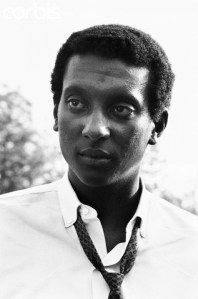
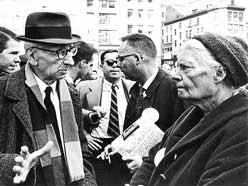 Seated just behind Carmichael is pacifist icon A.J. Muste, who had just returned from a visit to Vietnam (looking just as he did in the iconic photo with Dorothy Day, left). Then at the table itself sit Army privates Dennis Mora, James Johnson and Robert Samas, also known as the “Fort Hood Three,” announcing their intention to refuse deployment to Vietnam– flanked by Lincoln Lynch, of the Congress on Racial Equality, and the ubiquitous Staughton Lynd, co-chair with Muste of the Fort Hood Defense Committee.
 Image #2 was on the cover of WIN Magazine in January 1981. It’s from the November 1980
  nearly three weeks with the likes of Hugh Thompson (left) Ron Ridenhour (right)
  and the ubiquitous Tod Ensign, as well a the guy below (hidden three rows behind Jane Fonda) who hasn’t yet talked to me about what I still think of as his proudest hour. (Also buds like Steve Morse, Bill Perry, and Susan Schnall, who’ve given me so much of their time…) The whole thing makes me weirder than usual. I’m boring to be around: scattered, listening constantly to Hanoi Hannah on Pandora.com to get in the mood, etc. etc.
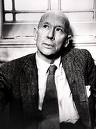 I loved this poem long before the author became one of my book’s guys (“i sing of olaf,” The Enormous Room et al.). I once asked my students, as their midterm, to explain to me how someone can write a love poem without ever using the word. Can you tell me?
 Then the college library,
 copy of Ciardi, with its cover of red, grinning, cartoon
 Incredible Panic Rules