Running behind, as usual. But I finally saw this, a few days after another viewing of Brother Outsider. A week to the election and I can’t get enough of angelic troublemakers. (I also can’t wait for the flick to come out, whatever Gawker says.)
Category Archives: politics
“the illusion that they have rights”
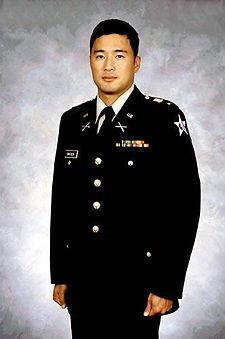
Many people I know, especially veterans (even antiwar vets), have mixed feelings about Lieutenant Ehren Watada, whose trial was blocked today by a federal judge. Some vets saw it as a betrayal of those under his command, others that the war was best resisted from within, For other, including myself, the ambivalence stems from the way his original decision — as the first Army officer to refuse to deploy to Iraq — was first taken up by (admittedly hard-working and sincere) front groups for front groups for the ossified sectarian left (whose militant rhetoric makes most of us giggle these days). All of which made it harder for many to simply look at what the 27-year-old college and OCS graduate was actually saying, about what he still considers an illegal order. Thank god for non-front groups like CCW and Vets for Peace, from whom I got the news today.
Those of you who’ve checked this page out more than once (why? Please comment, and lemme know!) know I’ve mostly been mired in the previous century, and mostly enmeshed in the lives of the Civil War vets who years later spoke out — opposing the annexation of what would become Watada’s home state, and joining in a grand effort to stop the Philippine War. “It is nothing but a wanton stretch of power. It is
lust for power and greed for land veneered with the tawdriness of false humanity,” wrote one, by then a U.S. senator as well as a survivor of the Battles of Shiloh and Spotsylvania. His sentiment echoes Watada’s, but the quote that gave this post a title is from far earlier, because I think it’s more relevant to what Watada faces next.
The judge in the case, Benjamin Settle, only dismissed three of the five counts against Watada:
Settle barred the military from retrying Watada on charges of missing his redeployment to Iraq, taking part in a news conference and participating in a Veterans for Peace national convention.
But the court did not rule out the possibility that the Army, after considering legal issues, could retry Watada on two counts of conduct unbecoming an officer resulting from his media interviews.
Watada’s attorney sensibly told the press that he hopes to get those charges dropped. That could be done without explicit vindication of Watada’s position. But part of me wants to see that second trial, if only to prove Sylvanus Thayer wrong.
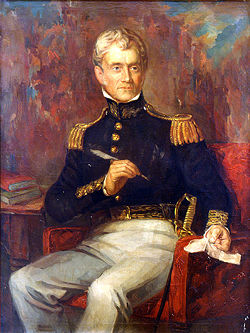
Thayer, the “Father of West Point,” in 1819 blamed a early mutiny at the academy on “the erroneous and unmilitary impressions of the Cadets that they have rights to defend.”
Someone should write a book about soldiers and vets who hold on to that “erroneous” impression. Oh right, I forgot.
Congratulations, Lt. Watada. When can I give you a call?
NYPIRG in 1984 – me and the president
Aaah, the commonalities of activism, at least in the 80’s. If you were in New York, you worked for NYPIRG at some point in your life. If I’d had political ambitions, I should have stayed: the guy who ran the Binghamton office, where I did some work on defense conversion before it was chic, went on to run the organization and was for a year Andrew Cuomo’s Special Advisor on Policy and Public Integrity.
I find out today that a scant 15 months later, someone else was organizing up a storm — at the same university where I’d end up teaching writing in 2002:
Obama’s environmental education began in January of 1984, a year after he graduated from Columbia University, when he took an $800-a-month position running a chapter of the Nader-inspired New York Public Interest Research Group (NYPIRG) on the campus of Harlem’s City College. He’d arrived at NYPIRG’s campus office—a cramped trailer parked on a patch of grass next to the science building—determined to change the world, but unclear about where to begin. “He didn’t seem unsure of himself, but he seemed unsure of where he belonged,” says Alison Kelley, who was a freshman at City College when Obama came to the campus. “You could tell he was driven, but he wasn’t sure what he was driven by.” The 22-year-old organizer began a campaign protesting apartheid, and organized a trip to DC to lobby for higher-education funding. But as time went by, Obama also found himself wrestling with a wide range of environmental issues: mass transit, recycling, pollution from local incinerators and landfills, compensation for victims of toxic-waste exposure.
I sent the article to one of the organizers I know well, whose work helped spark much of what I spent my time covering at Chelsea Now. One of those road-not-taken stories that can give at least a few smiles. (Is the title a jinx, or just visualization?)
Debate liveblog tonight, from my other life
Tonight: Live Blog of Final Debate, WVFC Style
It’s 20 or so days until Election Day. Tonight, at Hofstra University, Senators Barack Obama and John McCain face off one last time. And this time, WVFC plans to do more than we’ve done before. Rather than analyze media coverage or report after the fact , often sadly when the debates don’t address our concerns, Women’s Voices for Change is watching this last one closely.
Tonight, if you’re not justly distracted by the baseball playoffs, make this page one of your markers through the evening. Dr. Patricia Yarberry, Elizabeth Hemmerdinger, and some other of my board members will be chiming in through the night. We’ll also point to the savvy observations of our peers in the blogosphere.
Both candidates have a lot to answer for. We’ll be watching the questioners just as closely.
while I was gone
That’s also the title of a terrific, underrated novel by Sue Miller, which kept me up reading a few nights during my long interregnum from this blog. Few writers — maybe Tolstoy or Lynne Sharon Schwartz – combine as well gripping suspense and an incredible amount of thoughtfulness about marriage.
I’d kept thinking I would do an entry when I was finally free of my the 19th century — but like Marx or Baudelaire, I’m finding that exit is taking far longer than I’d hoped.
Part of the delay happened because my responsibilities at my paid blog gig changed, in a way that takes up more of my time and brain space than I like. (See the posts following this one for details.)
But the loong gestation was perhaps more the nature of the material itself — including two frigging new characters that nosed in insistently, kind of at the last minute. Just as I was about to write, “Dissent from soldiers was confined to diaries then,” along came..
Benjamin Grierson (left), longtime commander of the Buffalo Soldiers, and Silas Soule (below right), who came from one of those fine raging-abolitionist families (his brother named after William Lloyd Garrison).
I’d thought of pasting, and will at the end of this post, Soule’s testimony to an Army inquiry about Colorado’s Sand Creek Massacre, which he answers in classic soldier’s understatement.
Were these families, women and children, scalped and mutilated?
Yes, sir. They were.
Soule was far less understated in a letter to a fellow soldier: “I tell you Ned it was hard to see little children on their knees have their brains beat out by men professing to be civilized.
what we write about when we write about war
My current bookshelf is weirdly focused. The collection might seem a bit scary, if you didn’t know I was writing a book. (“What kind of obsessed veteran lives here?”) When you know, some of what’s here might then seem obvious: David Cortright’s Soldiers in Revolt, Kingston’s Veterans of Peace anthology, the trauma stuff ( Jonathan Shay’s iconic Achilles in Vietnam and Odysseus in America, Judith Herman’s Trauma and Recovery) and the war-specific guides: Rich Man’s War/Poor Man’s Fight, The Last True Story I’ll Ever Tell, The New Veteran ( by Charles G. Bolte, c1945).
Lately, i’ve been poring over the biographies and novels on the shelf, looking for guidance in the writing. (And kicking myself for never making the annual writers’ conference at the William Joiner Center.) Roy Morris’ invaluable Ambrose Bierce: Alone in Bad Company, Adam Hochschild’s King Leopold’ s Ghost, and James Tobin’s Ernie Pyle’s War seamlessly join narrative detail with the swing of history. So do Panther in the Sky, James Alexander Thom’s fictional biography of Tecumseh, and Joe Haldeman’s peerless 1968. (That last, however, is a bit like reading Joan Didion: you read it to be spun around by the master, not with the illusion you can write like that. )
But given the period I’m dealing with this week, I’ve been brought back to studying with Doctorow. More specifically, The March. In his 2005 review, Walter Kirn attaches to one of its core themes, which in some ways is half of mine:
The rampant destructiveness of Sherman’s march is, of course, the stuff of high school textbooks, but what isn’t so obvious is the way that destruction transfigures and transforms, pulverizing established human communities and forcing the victims to recombine in new ones. Inside the churning belly of Doctorow’s beast, individuals shed their old identities, ally themselves with former foes, develop unexpected romantic bonds and even seem to alter racially. Yes, war is hell, and “The March” affirms this truth, but it also says something that most war novels leave out: hell is not the end of the world. Indeed, it’s by learning to live in hell, and through it, that people renew the world. They have no choice.
Unlike the civilians in Doctorow’s novel, the soldiers in my story are all doing just that — either by challenging the discipline that makes war possible, or by speaking out either during service or afterward. Call it a coda to that central theme. But that’s not why I’m looking at Doctorow’s novel again.
Instead, I’m looking at a far more technical issue; how does he keep the arcs of four major characters, and an equal number of minor ones, flowing ahead together for the reader? Can watching his transitions, his narrative spins, help me do the same, at least for this chapter? Can the transformation of Ambrose Bierce from 20-year-old hothead to Homeric figure/journalist/mystery shape one arm of this March while still getting readers interested in the parallel transformations of Lewis Douglass, sailor Edward Strickland in Florida, little Quakers like Jesse Macy? Let alone Donelson Caffery, who became an ardent opponent of the Philippine war after not only preceding Bierce at the battle of Shiloh, but seeing his Confederate commander go down at that field with the funny name, which witnessed hand-to-hand fighting that sounds like tales from 1994 Rwanda?* (Leaving aside the related question of how to write honestly about it all as a non-veteran, and to keep it bearable without trivializing it.)
Some of it is making them vivid, not just externally but with some characteristic mental tropes/phrases. But most of those, the bits of dialogue that fill Doctorow’s work and stayed with me, are from fictional characters. Except for this historic meeting aboard a ship off the South Carolina coast, so dramatically right that it’s hard to believe it happened:
The long head was in proportion to the size of the man, but intensifying of his features, so that there was a sott of ugly beauty to him, with his wide month, deeply lined at the corners….What is important, the President was saying in conclusion, is that we do not confront them with terms so severe that they continue the war in their hearts. We want the insurgents to regard themselves as Americans.
Doctorow doesn’t use quotes here, smartly not putting words in the mouth of frigging Abraham Lincoln. (I checked; that poetry about “the war in their hearts” is a Vietnam-era formulation for sure.) He does well, considering his source (Sherman’s memoirs):
Lincoln was full and frank in his conversation, assuring me that in his mind he was all ready for the civil reorganization of affairs at the South as soon as the war was over; and he distinctly authorized me to assure Governor Vance and the people of North Carolina that, as soon as the rebel armies laid down their arms, and resumed their civil pursuits, they would at once be guaranteed all their rights as citizens of a common country; and that to avoid anarchy the State governments then in existence, with their civil functionaries, would be recognized by him as the government de facto till Congress could provide others.
I know, when I left him, that I was more than ever impressed by his kindly nature, his deep and earnest sympathy with the afflictions of the whole people, resulting from the war, and by the march of hostile armies through the South; and that his earnest desire seemed to be to end the war speedily, without more bloodshed or devastation, and to restore all the men of both sections to their homes. In the language of his second inaugural address, he seemed to have “charity for all, malice toward none,” and, above all, an absolute faith in the courage, manliness, and integrity of the armies in the field. When at rest or listening, his legs and arms seemed to hang almost lifeless, and his face was care-worn and haggard; but, the moment he began to talk, his face lightened up, his tall form, as it were, unfolded, and he was the very impersonation of good-humor and fellowship. The last words I recall as addressed to me were that he would feel better when I was back at Goldsboro’. We parted at the gangway of the River Queen, about noon of March 28th, and I never saw him again. Of all the men I ever met, he seemed to possess more of the elements of greatness, combined with goodness, than any other.
Doctorow lets his own beloved Wrede Sartorius, brought in to witness the meeting, to echo Sherman’s description and to more explicitly say what many think when we see those later, brooding portraits:
Perhaps his agony was where his public and private beings converged. Wrede lingered on the deck. The moral capacity of the President made it difficult to be in his company…..His affliction might be the wounds of the war he’d gathered into himself, the amassed miseries of this torn-apart country made incarnate.
Doctorow has, I think, also added a dash of Walt Whitman, the Civil War’s Homer, who wrote after watching Lincoln’s second inaugural procession the he could see
the lines, indeed, of vast responsibilities, intricate questions, and the demands of life and death, cut deeper than ever into his dark brown face; yet all the old goodness, tenderness, sadness, and canny shrewdness, beneath the furrows.
That last except courtesy of Roy Morris (again), in his The Better Angel: Walt Whitman and the Civil War. Morris quotes openly from both Whitman and Bierce in describing the events of their iives; I wonder if I can do something similar, while somehow using a contemporary voice to better expose all those gathered wounds to air. Or is my object to let their voices do it, and get out of the way?
We write about war, as Kirn said, as a way of writing about our lives. But there’s got to be a way to let those experiences be what they are, for a reader, before storytellers and politicians start yammering about what it all means.
* Speaking of Rwanda — and of learning from the master—check out this incredible Christian Science Monitor piece by my friend Jina Moore. If you ever need a reminder about what journalism can do, go re-read it.
Cross-posted at Devourer of Books.
we are all elizabeth edwards
Good for Hofstra University for telling the Associated Press yesterday that they still expect Elizabeth Edwards to speak there next month, as a start to the school’s fall lecture series. Even if she does have to bring the husband who famously admitted last week on Nightline that after her cancer went into remission, he got involved with a New Age blonde who’d already told Newsweek that Edwards was an “old soul” who could change the world, “If he could only tap into his heart more, and use his head less.”
Thanks to the National Enquirer, we are all painfully aware that Edwards’ heart was not the only part of his anatomy that interested Hunter, who went on to work for the campaign making “webisodes” and also became involved with Edwards fundraiser Andrew Young. And for at least this midlife woman, when the Enquirer broke that story last year, it also broke our hearts.
Not because of John, whose politics you can choose to find appealing or not. But because of Elizabeth, the unflinching cancer survivor who had just told the world that her cancer’s recurrence should not prevent her husband’s presidential campaign from going forward. As Sarah Hepola said last week on Salon.com, in a discussion among Broadsheet contributors worth reading in full:
I believed deeply in the Elizabeth-John love story, even as I distrusted Edwards as a politician (shifty trial lawyer that he seemed to be). When the Enquirer story broke, I shot back at others’ knee-jerk judgments, choosing to believe that a couple staring down a bleak future, wrestling with a grim prognosis (a couple who knows the agony of losing a son, no less), might make an unconventional sexual arrangement. And yet, what strikes me about today’s revelation is how conventional it seems to be: just another hotel bump-and-grind, another thirsty ego desperate to be slaked.
The first question, for many of us, upon hearing about Edwards’ infidelity was: does Elizabeth know? And if so, why is it anyone’s business but theirs? The first question was answered by Elizabeth herself, the day of the Nightline interview:
John made a terrible mistake in 2006. The fact that it is a mistake that many others have made before him did not make it any easier for me to hear when he told me what he had done. But he did tell me. And we began a long and painful process in 2006, a process oddly made somewhat easier with my diagnosis in March of 2007. This was our private matter, and I frankly wanted it to be private because as painful as it was I did not want to have to play it out on a public stage as well.
Yesterday, we learned from her family what most of us guessed last year: that she made exactly the sort of agonized choice to save her marriage that many of us have done, in her case exacerbated by her cancer.
“She couldn’t say, ‘Well, maybe we’ll work through this for years, or maybe we should separate for two years,'” said Hargrave McElroy, a friend, told the magazine for its Aug. 25 issue. “(The cancer) forced her to choose whether to move forward.”….
Edwards has said he both ended the affair and told Elizabeth about his infidelity in 2006. He kicked off his second bid for the White House in New Orleans a few days after Christmas, at an event that Hunter attended and Elizabeth did not.
But Elizabeth was out campaigning soon thereafter, and continued to do so after the couple disclosed in March that her breast cancer has spread to her bone and could not be cured. In July of that year, the Edwards renewed their vows to celebrate their 30th wedding anniversary in the presence of a small group of friends and family, including their three children.
“There was anguish — excruciating anguish — for her in dealing with this,” McElroy said. “She was angry and furious and everything, but at one point she had to make a choice: Do I kick him out, or do we have a 30-year marriage that can be rebuilt.”
Perhaps too much has been said about the levels of self-delusion required to think that such privacy was possible, 24 years after Gary Hart’s campaign was torpedoed by photos of his fling with Donna Rice. I’ll leave such issues to the likes of male pundits, from the disappointed Walter Shapiro on the left to the never-disappointing Rush Limbaugh to the right. And not having had the privilege of interviewing her, like many of the journos talking about it last week on Washingtonpost.com, I can only ponder why, with that first question answered, it still felt like the answer to the second was still that I needed to care.
It’s because many of us, from across the political spectrum, applauded as the couple renewed their wedding vows in their backyard. Melinda Henneburger, who profiled the couple in a 2005 Slate piece, wailed the week the story broke in “Just a Couple More Questions for John Edwards“:
Was all this going on when you renewed your wedding vows last summer at that intimate backyard ceremony where you wrote your own vows and there was not a dry eye in the house? (The one your wife of 30 years lost weight for, because she wanted to look pretty for you and fit into her wedding dress?)
Full disclosure: I’m not a cancer survivor, but I’ve been dancing with a chronic illness (multiple sclerosis) since 1984, and think it played a subtle role in the collapse of my much-shorter marriage a few years later. More recently, when asked how my partner of 11 years and I have stayed together, I’ve told friends that “The first thing you do at the sign of trouble is to STOP looking for the exit door.” All of which may influence how I respond to the question about the wedding,given the rest of what we now know. I can only admire both parties trying to salvage something they’d organized their lives around. And even her quixotic, it seems, decision to continue the campaign may have felt like something close to her core: the natural next step in a series of decisions that began when the far-more-political Elizabeth agreed with the”pretty boy” she married in 1986 that he, not she, was best suited to pursue elected office.
Having spent hundreds of words talking about it, I’m no longer in a position to say that we shouldn’t be thinking about Edwards’ involvement with Rielle Hunter (which he said, incorrectly, was a departure from “that North Carolina boy from the mill town.” Begging your pardon, sir, but who else would have stayed a minute with a crystal-wielding girl he meets in a bar, whose thinking smacks of Scientology?) And I won’t even insist that equal time be given to Carol McCain, whose husband John tossed her after she no longer looked like a swimsuit model after her car accident. Because he could.
Still, I think the title works. We all could be Elizabeth: we all could see something we’ve fought for splintered in a second, because of others’ stupidity or our own. As midlife women, we curse what our bodies can no longer do or be or look like, even as we celebrate the power of this new stage. And we can work as hard as we can to defend Elizabeth’s, and Carol’s, right to privacy as the political scene begins rightly to focus on issues bigger than all of us.
(Cross-posted at Women’s Voices for Change. Though without the Scientology reference, likely for legal reasons…)
Quakers in uniform: oxymoron, or profound truth?
I spend so much time celebrating the courage of soldiers that some might wonder where the old peacenik had got to. (If some old classmate from Binghamton stumbled here, e.g., what they might remember most is my play Too Many Martyrs, a melodrama about the U.S.-to-Canada draft resister underground railroad.) But as I construct my Civil War narrative, I’m also cheered to report some appropriately complicated pacifist characters, whose deep abolitionist beliefs made them conflicted about what was that century’s “good war.” An early glimpse:
- Jesse Macy, who may have invented the character of CO medic. Offered the role of cook and horseman when he shared his membership in the Society of Friends, he refused, insisting he would train and travel with his unit only if he could work for the Army surgeons, and thus help care for the war’s relentless casualties.
- George Garrison, who after the Emancipation Proclamation went so far as to enlist and become an officer with the Massachusetts 55th Division of the United States Colored Troops (USCT). Thus breaking the heart of his father Lloyd, the renowned abolitionist, (note to picky historians: I know the Garrisons weren’t exactly Quakers, but Lloyd himself characterized their paths as “nearly identical.”) Garrison endured enough rough strife to explain how afterward, despite numerous efforts to get him established in business, he drifted from job to job, interested mostly in veterans’ reunions. (Unfortunately for my narrative, he did not join fellow USCT veterans Charles Francis Adams and Lewis Douglass at the end of the century in the Anti-Imperialist League of America, also known as U.S. Out of the Philippines.
- Of course, some were less conflicted, and offer more or less the classic Quaker story. Cyrus Pringle, whose travails in 1863 Vermont eventually came to the attention of Washington. Before then, as Wikipedia notes, “Refusing to perform all military duty, he was subjected to severe
discipline. The Friends were kept for days in the guardhouse in company
with drunks and criminals. Finally, on October 3, 1863, at Culpepper, Doctor Pringle was staked to the ground, with his arms outstretched and his legs cruelly racked; he was left in this position for hours, until ‘so weak he could hardly walk or perform any exertion.’ He was even threatened with death if he would not give up, but his only reply was, ‘It can but give me pain to be asked or required to do anything I believe to be wrong.’ After a day of extreme pain he wrote in hisdiary, ‘This has been the happiest day of my life, to be privileged to fight the battle for universal peace.’ “
These ghosts mingle with those whose journeys had nothing to do with Quaker qualms, sharing their horror at the blood soaked into the ground during those grueling four years. And — just as much earlier and later – they didn’t inspire the kind of revulsion from their fellow soldiers that many civilians assume. Macy even writes that by the end, when he was standing up to his command just as his unit was joining Sherman’s march through Geotgia, his peers “had agreed to stand together in forcible resistance in case extreme measures were instituted against me. I could not ask for treatment more uniformly respectful and friendly than that which I received from officers and men alike in Sherman’s army while on the March to the Sea.” Integrity respected, perhaps above all.
Not so unlike the respect shown by Major William Kunstler to C.O. medic Lew Ayres during World War II, or by the anonymous soldiers in Baquba, Iraq, who shot surreptitious peace signs to the authors of the early underground blog Fight to Survive. I don’t mean to imply it’s all kumbaya, to minimize the real differences; but it’s kind of cool to see how long that respect has existed, among factions traditionally painted as enemies.
diving into the wreck
A post of re-entry: the task of moving while doing the newsblog for Women’s Voices and finishing up my responsibilities at Chelsea Now was pretty punishing, and pushed me almost entirely away from the book. Now I sit on the back porch of my in-laws’ house in northeast Philadelphia, birds chatting away about the unexpected cool weather, the occasional visiting bunny rabbit not yet making his confused appearance. (Think of it as Bread Loaf w/o the fellow writers, or the alcohol.)
And after some necessary re-immersion, I may be finally ready to commence my necessary 20-week writing marathon, treating this place as an enforced writers’ colony. At least mostly. (I do still want to see if I can find someone to hire me to write about IVAW at one of the political conventions at the end of this month.)
When I thought of writing this post, I knew the title, and found the Adrienne Rich poem a bigger gift than I’d thought. Though her quarry was patriarchy, the psychological/creative task feels the same:
First having read the book of myths,
and loaded the camera,
and checked the edge of the knife-blade,
I put on
the body-armor of black rubber
the absurd flippers
the grave and awkward mask.
I am having to do this
not like Cousteau with his
assiduous team
aboard the sun-flooded schooner
but here alone….I came to explore the wreck.
The words are purposes.
The words are maps.
I came to see the damage that was done
and the treasures that prevail.
I stroke the beam of my lamp
slowly along the flank
of something more permanent
than fish or weedthe thing I came for:
the wreck and not the story of the wreck
the thing itself and not the myth
the drowned face always staring
toward the sun
the evidence of damage
worn by salt and away into this threadbare beauty
the ribs of the disaster
curving their assertion
among the tentative haunters.
“The wreck and not the story of the wreck.” Multiple meanings in my project, since so many of my characters are also storytellers. Not to get distracted even by Ambrose Bierce’s powerful description of Shiloh, or Fred Marchant’s incredible Vietnam poems — though all are useful, even essential in undercutting the predominant story of gung-ho, mindless soldiering.
My task here is that weird combination of journalist, historian (not one but try, like my role model Adam Hochschild, to play one on TV) and novelist. To look closely at my characters, at where their lives fit into the shape of their wars (the ones they fought in, the ones they dissented about, not always the same). And now, the trickiest part: to be Dante’s Virgil. To tell their stories, and the overall story, smoothly enough so that it goes down now like hard medicine but like whipped cream. Sounds easy, doesn’t it?
We circle silently
about the wreck
we dive into the hold.we are the half-destroyed instruments
that once held to a course
the water-eaten log
the fouled compassWe are, I am, you are
by cowardice or courage
the one who find our way
back to this scene
carrying a knife, a camera
a book of myths
in which
our names do not appear.
paralyzed by constant motion
Those who know me best know one of the reasons I’ve not posted in a week: this new gig I’ve taken on, on top of everything else, is making my already-overcrowded brain call out: APPROACHING MAXIMUM CAPACITY — even as it brings me back to my starting point as a NY journalist.
Now, before moving ahead to the travails of New York City or diving into centuries of military dissent, I’m pulling together a handful of headlines that mean something to my, ahem, demographic.
You’ll notice a healthy percentage of celebrity women over 40, from Debra Winger to Katie Couric. (I did have to restrain myself from throwing in a discussion of the Christie Brinkley divorce mess, though it may represent most heterosexual women’s nightmare: even if you’re a supermodel, turn 40 and the cad will find a teenager to mess around with. Though the more snarky among us may wonder at her daughter with Billy Joel daughter getting involved, since Joel’s “I Love You Just the Way You Are” was written shortly before he left the “you” in question for the then-younger Brinkley).
It all feels a little back-to-the-future at times, given my past with Women’s Enews. But I’m guessing there’s already more mention of the war in Iraq in the newsblog than there might be with someone else writing it; I was also thrilled to be able to embed video of both Dr. Who and Cyndi Lauper (as well as more sober video on Darfur). Stop by if you like (the first link) and leave a comment.
Meanwhile, I’m supposed to be packing up my NY life, still working the Chelsea gig, and actually finishing a freelance piece about the woes of that high school I’ve been covering for the latter. Thank god for the recent news about caffeine and MS, since I’m gonna need all available crutches for while. (That news only confirmed something I’d felt for years; I suspect anyone who saw me in the 1990s jumping around San Francisco’s Barefoot Boogie on newly popped Vivarin wouldn’t have been surprised either.)And if by the end of the month I end up dissolved into one of the boxes I’m packing, please add water when the box arrives in Philly.