Category Archives: organizing

The XX factor in Obama’s transition

On my way to New York today, where I plan on seeing Jeffrey Renard Allen give a reading in my old ‘hood and cover tomorrow’s hearing for the Iraq vets that make up the Hempstead 15. But to wrap up the election thread for this week, here’s the news blog I wrote for WVFC, since I really do think that the presence of women in Obama’s team has the capacity to be quietly transformational. (For video for all of the women below, you have to click on my original post.)

It’s been eight years since we has such a new slate of advisors to look at, and ponder what their role will be in the changes afoot. The women below come from a range of backgrounds, from corporate boardrooms (several on the Forbes 100 Most Powerful Women) to California classrooms and governor’s mansions.) It would be foolish to make generalizations about a government with so many representatives of The New Menopause in key positions.

But we can dream — that our concerns will certainly not be left behind, and that midlife’s particular mix of idealism, sense of humor, deep worry, and renewed energy can both add power to the new policies being developed and ensure that they’re grounded by real-world, physical realities.

More details later, but here’s an initial honor roll, with as much video as felt appropriate:

At the helm: One of the transition team’s three co-chairs is Chicago attorney Valerie Jarrett, 51, CEO of The Habitat Company (seen above(.  A Newsweek profile in May noted: “Jarrett got her start working for Harold Washington, the city’s first black mayor. Her grandfather ran the Chicago Housing Authority in the 1940s. Obama has long turned to her for advice. When he wanted to run for the U.S. Senate, he first had to convince Michelle and Jarrett that it was a good idea. He’s been seeking her counsel ever since.”

Show him the money:  Speaking of the governor’s mansion, Michigan’s Jennifer Granholm, 49, (above with First Lady Michelle Obama) is a core member of  the newly-announced team of economic advisers. Granholm joins not just Warren Buffet but
Laura D’Andrea Tyson, dean of the Haas School of Business at the University of California at Berkeley and former chair of the President’s Council of Economic Advisors;  Anne Mulcahy, 57, Chairman and CEO, Xerox;
and Hyatt exec Penny Pritzker. 49.

    In the boardroom:

    Granholm, who was mentioned as a dark-horse vice-presidential candidate, is also on the transition team’s Advisory Board, which also includes Arizona Governor Janet Napolitano, 51,  who was profiled by Newsmix in July as a veep prospect; Susan Rice (above), 43, Brookings Institution fellow and former assistant secretary of state for African Affairs; and former EPA chair Carol Browner (below), the longest-serving administrator in the
    history of the agency, staying through both terms of the Clinton
    presidency.

    The long arms of the law: Women helping power the transition’s legal team include  general counsel (and Harvard Law school classmate) Cassandra Butts, former senior vice president for domestic policy at the Center for American
    Progress and senior adviser to Rep. Richard Gephardt (D-Mo.);  Lisa Brown, the Executive Director of the American Constitution Society, and Melody Barnes, 43, of the Center for American Progress as co-directors of agency review; and Clinton adviser Christine A. Varney, 52, as counsel for personnel.

    That different voice: Get used to another face next to the familiar Obama spokespersons Robert Gibbs and David Axelrod:  Michelle Obama’s chief of staff, 40-year-old Stephanie Cutter (seen above dueling with Chris Matthews during the campaign). During the Clinton Administration, Cutter worked as deputy communications director in both the White House and U.S. EPA.

    We at WVFC now know we have to get busy deciding who on this list we should try to interview and profile. We’d welcome readers’ comments — both about who we should talk to, and what questions you want to ask them when we do!

    — Chris L.

    A couple mornings after

    Given what I’ve posted here, you were likely expecting me to be exultant tonight. And I remain heartened, thrilled cautiously hopeful, and glad for the national results. In case you were curious about my little corner of the swing state, Ward 58 went with the wave, 69 percent for Obama — though not precinct 26, where I voted, with its Russian immigrants and many retired cops and firefighters who went for their fellow veteran.

    But I also suddenly want a T-shirt that says “We Are All Harvey Milk.”  Dan Savage, on Salon yesterday, encapsulated what Rachel and I felt:

    Tuesday night I was overjoyed.

    But Wednesday morning, reading the papers and listening to the news on the radio, my boyfriend and I — we’re boyfriends in the USA, husbands in Canada — sat at our kitchen table and had the exact same discussion we had the morning after the 2004 election: When the hell are we moving to Canada?

    The anti-gay politicking that goes on in this country is a bit like a dog whistle: Straight people can’t hear it, but it drives gay people absolutely around the bend. The importance of Obama’s victory can’t be overstated; I’m as moved as anyone else. But the passage of anti-gay marriage amendments in Arizona, Florida and, most heartbreakingly of all, California (and with overwhelming support from African-American voters), along with the passage of an anti-gay adoption amendment in Arkansas, left us both feeling shell-shocked, betrayed and angry.

    We’ll see what happens. Personally, I’m in favor of abolishing civil marriage entirely: everyone gets a legal civil union, and leave the multiple definitions of  marriage to the multiple churches.

    bayard1But it all feels like a dream deferred, as Bayard noticed 20 years ago. That video above is of the new President dancing with a woman whose wedding, seen below, may have just been invalidated. Here’s to dancing with the future, but only if all of us get to do it.

    watch this. then again. then vote. then cry.

    Running behind, as usual. But I finally saw this, a few days after another viewing of Brother Outsider. A week to the election and I can’t get enough of angelic troublemakers. (I also can’t wait for the flick to come out, whatever Gawker says.)

    “the illusion that they have rights”

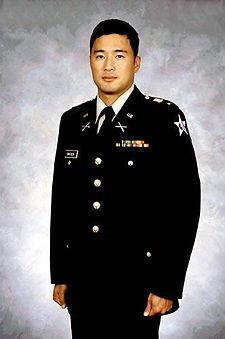
    Many people I know, especially veterans (even antiwar vets), have mixed feelings about Lieutenant Ehren Watada, whose trial was blocked today by a federal judge. Some vets saw it as a betrayal of those under his command, others that the war was best resisted from within, For other, including myself, the ambivalence stems from  the way his original decision — as the first Army officer to refuse to deploy to Iraq — was first taken up by (admittedly hard-working and sincere) front groups for front groups for the ossified sectarian left (whose militant rhetoric makes most of us giggle these days). All of which made it harder for many to simply look at what the 27-year-old college and OCS graduate was actually saying, about what he still considers an illegal order. Thank god for non-front groups like CCW and Vets for Peace, from whom I got the news today.

    Those of you who’ve checked this page out more than once (why? Please comment, and lemme know!) know I’ve mostly been mired in the previous century, and mostly enmeshed in the lives of the Civil War vets who years later spoke out — opposing the annexation of what would become Watada’s home state, and joining in a grand effort to stop the Philippine War. “It is nothing but a wanton stretch of power. It is
    lust for power and greed for land veneered with the tawdriness of false humanity,” wrote one, by then a U.S. senator as well as a survivor of the Battles of Shiloh and Spotsylvania. His sentiment echoes Watada’s, but the quote that gave this post a title is from far earlier, because I think it’s more relevant to what Watada faces next.

    The judge in the case, Benjamin Settle, only dismissed three of the five counts against Watada:

    Settle barred the military from retrying Watada on charges of missing his redeployment to Iraq, taking part in a news conference and participating in a Veterans for Peace national convention.

    But the court did not rule out the possibility that the Army, after considering legal issues, could retry Watada on two counts of conduct unbecoming an officer resulting from his media interviews.

    Watada’s attorney sensibly told the press that he hopes to get those charges dropped. That could be done without explicit vindication of Watada’s position. But part of me wants to see that second trial, if only to prove Sylvanus Thayer wrong.

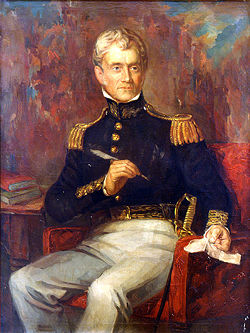
    Thayer, the “Father of West Point,” in 1819 blamed a early mutiny at the academy on “the erroneous and unmilitary impressions of the Cadets that they have rights to defend.”

    Someone should write a book about soldiers and vets who hold on to that “erroneous” impression. Oh right, I forgot.

    Congratulations, Lt. Watada. When can I give you a call?

    NYPIRG in 1984 – me and the president

    Aaah, the commonalities of activism, at least in the 80’s. If you were in New York, you worked for NYPIRG at some point in your life. If I’d had political ambitions, I should have stayed: the guy who ran the Binghamton office, where I did some work on defense conversion before it was chic, went on to run the organization and was for a year Andrew Cuomo’s Special Advisor on Policy and Public Integrity.

    I find out today that a scant 15 months later,  someone else was organizing up a storm — at the same university where I’d end up teaching writing in 2002:

    Obama’s environmental education began in January of 1984, a year after he graduated from Columbia University, when he took an $800-a-month position running a chapter of the Nader-inspired New York Public Interest Research Group (NYPIRG) on the campus of Harlem’s City College. He’d arrived at NYPIRG’s campus office—a cramped trailer parked on a patch of grass next to the science building—determined to change the world, but unclear about where to begin. “He didn’t seem unsure of himself, but he seemed unsure of where he belonged,” says Alison Kelley, who was a freshman at City College when Obama came to the campus. “You could tell he was driven, but he wasn’t sure what he was driven by.” The 22-year-old organizer began a campaign protesting apartheid, and organized a trip to DC to lobby for higher-education funding. But as time went by, Obama also found himself wrestling with a wide range of environmental issues: mass transit, recycling, pollution from local incinerators and landfills, compensation for victims of toxic-waste exposure.

    I sent the article to one of the organizers I know well, whose work helped spark much of what I spent my time covering at Chelsea Now. One of those road-not-taken stories that can give at least a few smiles. (Is the title a jinx, or just visualization?)